What Does an Arborist Do in Tree Care?
An arborist helps you keep your trees healthy and safe by pruning damaged branches, diagnosing illnesses, and treating pests or diseases. They carefully plant trees to guarantee strong growth.
They also work around power lines with special training to avoid hazards. Arborists provide expert advice on legal rules, removal, and support systems for weak limbs.
If you want to understand how they manage these tasks and protect your property, there’s plenty more to explore. It’s pretty interesting to see all the ways they care for your trees!
Key Takeaways
- Arborists perform specialized pruning to keep trees healthy, safe, and looking good. They avoid harmful practices like topping, which can damage the tree.
- They also diagnose and treat diseases, pests, and structural problems. This involves inspections, lab tests, and creating treatment plans tailored to each tree’s needs.
- When necessary, arborists safely remove trees or install support systems to stop branches or trunks from failing.
- Plus, they make sure trees are planted properly, especially near power lines. They often work with utility companies to keep things safe during maintenance.
- Certified arborists use special equipment and follow important regulations. They also provide expert advice to help with legal and safety issues.
What Does an Arborist Do in Tree Care?
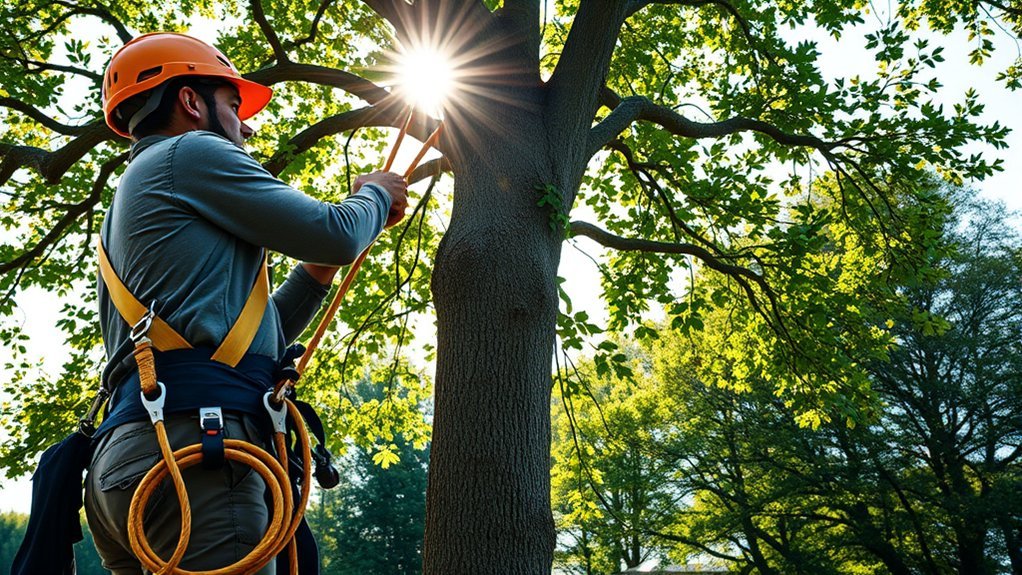
While you might think tree care just means trimming branches, an arborist does much more than that. An arborist plays an essential role in maintaining tree health and safety through various expert services.
Beyond simple pruning, they perform specialized pruning techniques like crown raising and reduction to enhance a tree’s health, appearance, and safety. When trees become hazardous or diseased, the arborist safely carries out tree removal using proper equipment and methods to protect property and people.
Their work often involves installing support systems such as cabling and bracing to prevent limb or trunk failure, ensuring the tree remains stable for years. You’ll also find arborists working in challenging environments, including near power lines or urban settings, where they apply strict safety protocols.
How Do Arborists Diagnose and Treat Tree Problems?
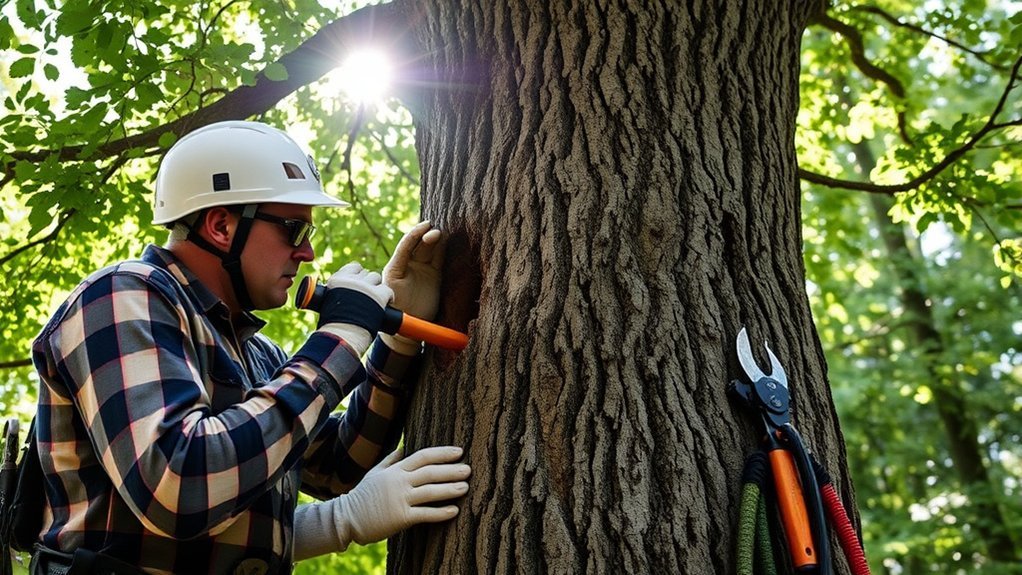
Because trees can’t tell you when they’re sick, arborists rely on careful diagnosis to spot problems early. When diagnosing tree health issues, they conduct visual inspections, looking for signs like dieback, unusual leaf coloration, cracking, or fungal growth.
To get a clearer picture, they use diagnostic tools such as resistographs to detect internal decay or soil tests to assess nutrient deficiencies. Sometimes, they take tissue or bark samples for lab analysis to identify diseases or pathogens accurately.
Once the problem is identified, arborists develop a treatment plan tailored to the tree’s needs. This might include soil amendments to improve nutrition, pest control measures, or applying specific fungicides or insecticides.
Accurate assessment ensures the treatment targets the root cause, helping restore tree health or, if necessary, deciding if removal is safer. By combining expertise with diagnostic tools, arborists effectively protect and maintain your trees’ wellbeing.
Pruning Techniques Arborists Use to Keep Trees Healthy
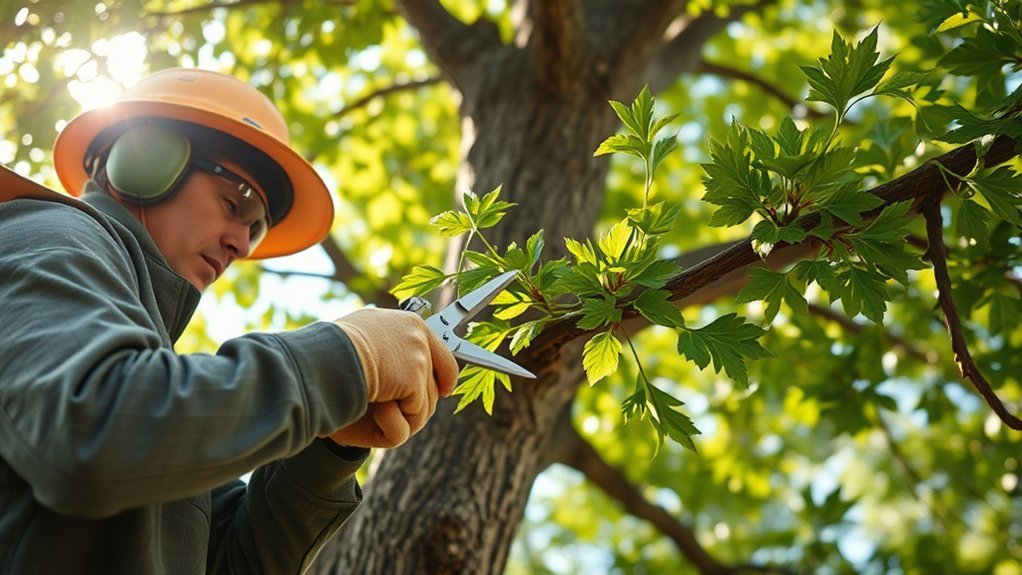
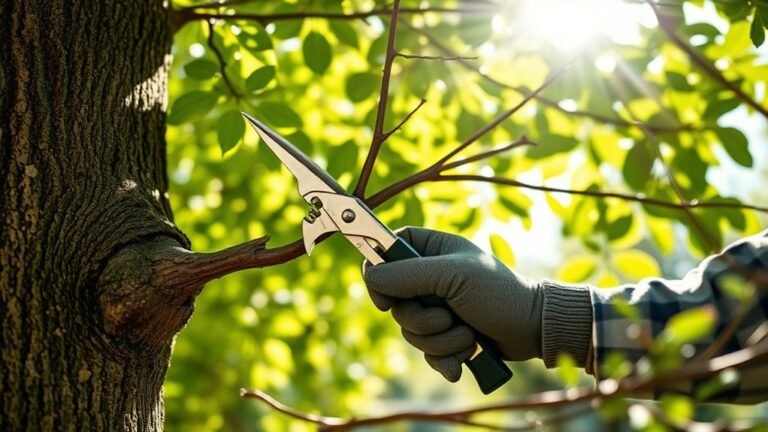
When you prune a tree, making precise cuts at the right spots helps keep it healthy and strong. Arborists avoid harmful practices like topping, which can damage the tree and lead to weak growth.
Understanding purposeful pruning techniques guarantees your trees stay safe and vibrant for years to come. It’s all about knowing what to cut and when to cut it. That way, your trees will thrive!
Purposeful Pruning Cuts
If you want your trees to stay healthy and strong, purposeful pruning cuts are essential. These cuts aren’t just random trims; they’re made with clear goals to improve tree health, structure, and safety.
Proper pruning means making each cut just outside the branch collar to help the tree heal efficiently. When you focus on purposeful pruning cuts, you remove dead, diseased, or damaged branches. This prevents decay and pests from spreading.
Here are three key pruning cuts used in tree care:
- Crown thinning to increase airflow and light penetration
- Crown raising to improve clearance and visibility
- Crown reduction to manage size and reduce stress
Avoiding Harmful Practices
Although pruning is vital for tree health, not all cuts are beneficial. You need to steer clear of harmful practices like topping or lopping. These might seem like quick fixes but actually cause weak regrowth, internal decay, and compromise the tree’s structure and safety.
Proper pruning involves targeted techniques such as crown raising and crown reduction. These improve both safety and aesthetics without damaging the tree. Every cut you make is a wound that can reduce photosynthesis, so it’s important to prune only when necessary, using precise, purposeful cuts.
Also, avoid applying wound dressings like paint or tar. They hinder healing and can do more harm than good. By following these guidelines, you help maintain the tree’s health and longevity.
Why Proper Tree Planting Is Crucial for Tree Health
Because proper tree planting sets the foundation for a tree’s entire life, it’s essential to get it right from the start. When you focus on proper planting, you’re directly supporting long-term tree health by ensuring the roots develop well and the tree remains stable.
One key factor is the correct planting depth; plant too deep or shallow, and root development suffers. This can stunt growth or cause instability.
Here’s what you need to remember for healthy tree planting:
- Choose the right species for your local environment to support natural growth patterns.
- Plant at the correct planting depth to avoid root suffocation or exposure.
- Use well-draining soil and give the tree enough space to encourage strong root development.
How Do Arborists Manage Tree Safety Near Power Lines?
When you’re dealing with trees near power lines, safety has to come first. Arborists trained in this area maintain strict safety distances—usually at least 10 feet from low-voltage lines, with greater clearance for higher voltages.
To manage tree safety, they assess how close trees are to power lines and often coordinate with utility companies to de-energize lines when necessary. This teamwork helps keep everyone safe.
Certified professionals, known as Qualified Line Clearance Arborists, undergo extra training to work safely around energized lines. They use specialized climbing systems and insulated tools designed to reduce the risk of electrical contact.
Proper pruning techniques like crown reduction or raising help clear branches away from wires. This way, they minimize dangerous direct contact or the need for tree removal.
How Arborists Use Climbing Gear and Specialized Equipment
Keeping trees safe near power lines requires precision and care, which is where climbing gear and specialized equipment come into play. When you’re working in tree care operations, using the right tools guarantees both your safety and the health of the tree.
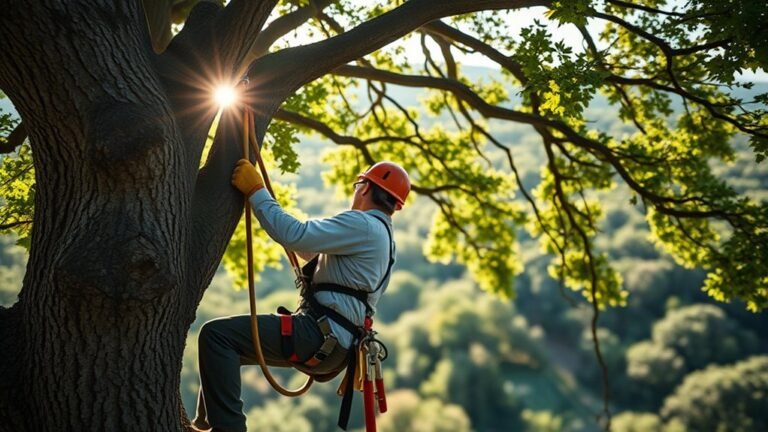
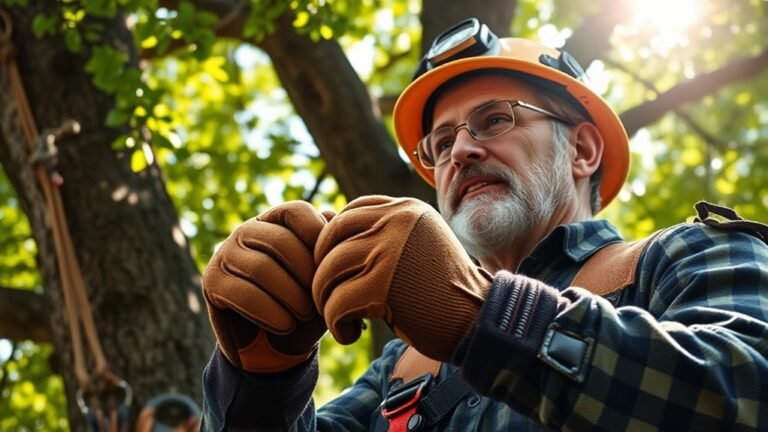
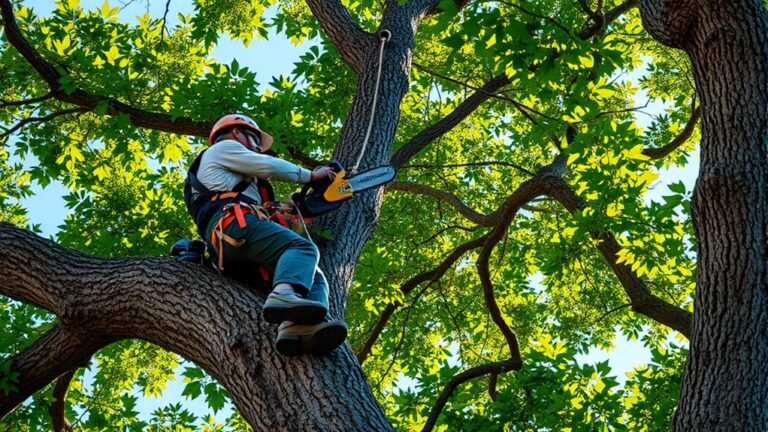
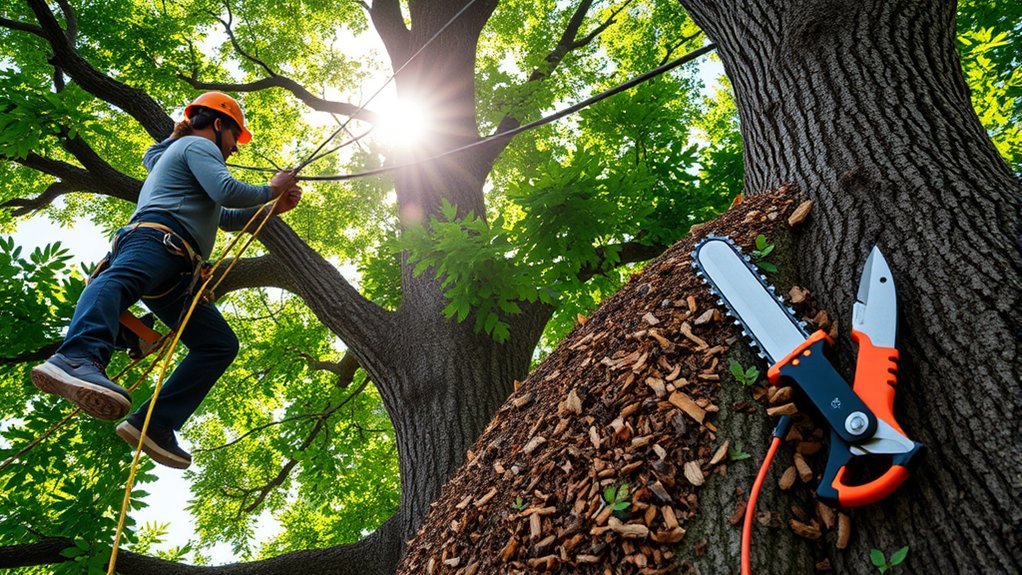
Arborists rely on climbing harnesses, ropes, and carabiners to ascend safely and position themselves effectively.
Here’s how they use specialized equipment during tree care operations:
- Employing techniques like the Stationary Rope System (SRS) and Moving Rope System (MRS) for efficient and secure access.
- Using mechanical devices such as ascenders, pulleys, and mechanical lifts to control movement and aid precise cutting.
- Minimizing tree damage by reserving spikes or gaffs only for essential safety or removal tasks.
It’s also important to regularly inspect and maintain climbing gear. This helps keep safety standards high and ensures every operation runs smoothly without risk.
What Certifications and Training Do Arborists Need?
Although experience in the field is invaluable, obtaining certification is vital if you want to be recognized as a qualified arborist. One of the most respected credentials you can earn is the ISA Certification from the International Society of Arboriculture.
To qualify, you’ll need at least three years of full-time experience and must pass a thorough exam covering tree biology, pruning, safety, and disease management. Beyond initial certification, ongoing education is required to keep your knowledge current with evolving certification standards and industry techniques.
Your training will typically include coursework in tree biology, safety protocols, proper pruning, and using specialized climbing equipment. Depending on your location, certification standards may vary; for example, Australia and the UK often link arborist certification to formal education programs like TAFE.
Regardless of where you are, pursuing both solid education and ISA Certification ensures you meet professional expectations and can provide expert tree care.
How Arborists Assist With Tree Legal and Regulatory Issues
Because tree-related disputes and regulations can get complex, arborists play an essential role in steering legal and regulatory challenges. When you face legal issues involving trees, an arborist’s expert assessment is key in resolving boundary disputes and other legal conflicts.
They also guarantee you comply with local laws by securing the necessary permits before pruning or removing protected trees. Here’s how arborists assist you:
- Provide unbiased assessments for insurance claims, damages, or vandalism cases involving trees.
- Serve as expert witnesses or consultants in court to clarify tree-related legal issues.
- Help develop construction plans that protect valuable or heritage trees, keeping your project compliant.
When Should You Hire a Certified Arborist for Tree Care?
You should hire a certified arborist when dealing with complex tree health problems or pruning near power lines to keep things safe and compliant.
Their expertise helps you avoid risks and guarantees proper care. Knowing when to call one can save your trees and protect your property.
Recognizing Complex Tree Issues
When you notice signs like hollow wood, unusual growth patterns, or dead branches, it’s time to call a certified arborist. These symptoms often point to internal decay or structural issues that threaten your tree’s health and safety.
A professional can perform a thorough risk assessment to determine the best course of action. Here are three key situations to watch for:
- Hollow or rotting wood inside the trunk, which weakens tree stability.
- Visible cracks, leaning trunks, or storm damage indicating serious structural concerns.
- Complex crown thinning needs to prevent harm and maintain long-term tree health.
Recognizing these complex issues early guarantees your tree receives expert care before problems worsen. It’s always better to act sooner rather than later!
Ensuring Safety And Compliance
Spotting complex tree problems is just the start of protecting your property and maintaining healthy trees. You should hire a certified arborist to guarantee safety and compliance, especially when pruning near power lines or handling hazardous tree removal.
Their specialized training guarantees proper work that meets local regulations and industry standards. Before any construction, a certified arborist can assess protected or heritage trees, helping you avoid legal issues.
They’re also essential for diagnosing tree health problems that could lead to dangerous, weak limbs. If you face legal or insurance disputes involving trees, their expert assessments ensure all safety requirements are met.
Relying on a certified arborist means you’re prioritizing safety and following the right protocols for effective tree care. It’s the smart way to keep your trees—and your property—safe.
Where to Find and Learn From Certified Arborists
Although finding a certified arborist might seem challenging, several reliable resources make it easier to connect with these tree care professionals. To locate an ISA Certified Arborist, start by exploring the International Society of Arboriculture’s official online directory.
This searchable database lets you verify certification status and find experts specializing in your tree care needs.
Here are three ways you can find and learn from certified arborists:
- Visit www.treesaregood.org, a thorough platform offering resources and a directory of certified arborists near you.
- Contact local nurseries, tree care companies, or municipal forestry departments, where professional tree specialists often work.
- Attend workshops, seminars, or educational events hosted by arborist associations to learn directly from certified experts.
Using these resources ensures you’re working with qualified professionals who understand proper tree care and safety standards. It’s a smart way to keep your trees healthy and safe.
Frequently Asked Questions
How Much Does an Arborist Cost per Hour?
You can expect an arborist to charge anywhere from $75 to $150 per hour, depending on where you live and how complex the job is.
If you hire a certified arborist, the rate might be higher, often between $100 and $200 per hour. Emergency or hazardous work could cost you over $200 hourly.
Sometimes, arborists offer flat rates for specific jobs, so it’s smart to ask for a detailed quote upfront. It helps avoid surprises later.
Is Hiring an Arborist Worth It?
Yes, hiring an arborist is definitely worth it. You’ll get expert care that keeps your trees healthy and safe, which can save you money by preventing costly damage or disease.
Plus, arborists handle tricky jobs efficiently, reducing risks. They also help your property look better and stay compliant with local laws.
What’s the Difference Between an Arborist and a Tree Service?
The main difference is that an arborist is a certified expert trained in tree health, safety, and care, while a tree service usually focuses on physical tasks like removal or pruning without specialized credentials.
You’ll get detailed assessments and safe, ethical care from an arborist, whereas tree services mainly handle the labor.
What Are the Signs I Need to Hire an Arborist?
If your tree’s acting like a drama queen—dropping dead branches or showing cracks in its trunk—you’ll want to call an arborist.
Signs like fungi, pests, leaning trunks, or damaged roots are red flags you shouldn’t ignore.
Also, if your tree’s playing too close to power lines or buildings, it’s time for a pro to step in.
Don’t wait for problems to grow; get expert help early.
Conclusion
Think of an arborist as a tree’s personal doctor, diagnosing issues before they become serious. Just like a skilled gardener knows when to prune for healthier blooms, arborists trim your trees for lasting strength.
Studies show well-maintained trees can live twice as long, proving their care matters. When you hire a certified arborist, you’re not just planting a tree—you’re nurturing a lifelong companion that grows with your home and safety in mind.