What Is a Hunting Stand and How to Use It
A hunting stand is an elevated platform that gives you better visibility and shooting angles while keeping you concealed from animals. You’ll attach it to a sturdy tree or set it up as a blind.
Then, position it downwind to avoid alerting deer with your scent.
Always use a safety harness and secure the stand properly before climbing.
If you’re ready to improve your hunting strategy, there’s plenty more to explore on choosing the right tree and maintaining quiet access.
Key Takeaways
- A hunting stand is an elevated platform that gives you better visibility and shooting angles. It also helps reduce the chances of animals detecting your scent and movement.
- There are several common types of stands, like ladder, climbing, and hang-on stands. You’ll also find box blinds and elevated towers, each offering different levels of portability and concealment.
- When picking a tree for your stand, look for one that’s healthy and straight. It should be at least 12 inches in diameter, have minimal branches, and be located near animal routes for the best setup.
- Safety is key, so always wear a full-body harness attached to the tree or a lifeline before you start climbing. And remember to keep three points of contact to stay stable as you go up.
- Place your stand downwind of the areas where animals are most active. Make sure you clear quiet access paths and carefully trim shooting lanes without disturbing the wildlife too much.
What Is a Hunting Stand and Why Use It?
What exactly is a hunting stand, and why should you consider using one?
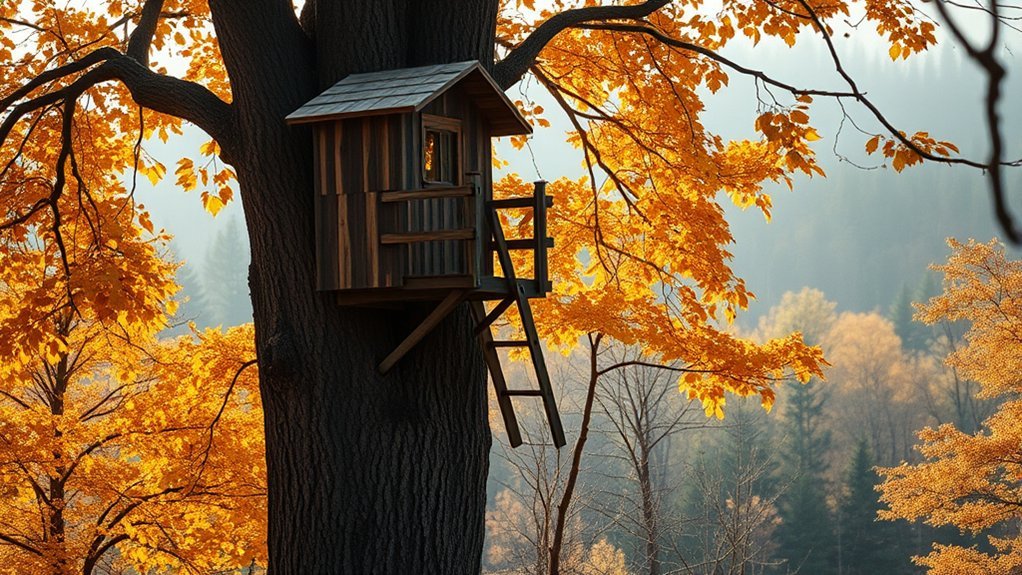
A hunting stand is a platform or concealment designed to elevate you above ground level, giving you better visibility and improved shooting angles. One common example is a tree stand, which attaches to a tree, allowing you to remain hidden while observing game from a strategic vantage point.
Using a hunting stand helps reduce your scent and movement visibility, making it less likely that animals will detect you. This elevated position not only enhances your chances of spotting game but also provides a safer and more comfortable hunting experience.
To use a hunting stand effectively, you’ll need to carefully choose its placement, follow essential safety precautions, and understand animal behavior. By doing so, you’ll maximize your hunting success and enjoy the outdoors more fully.
Main Types of Hunting Stands
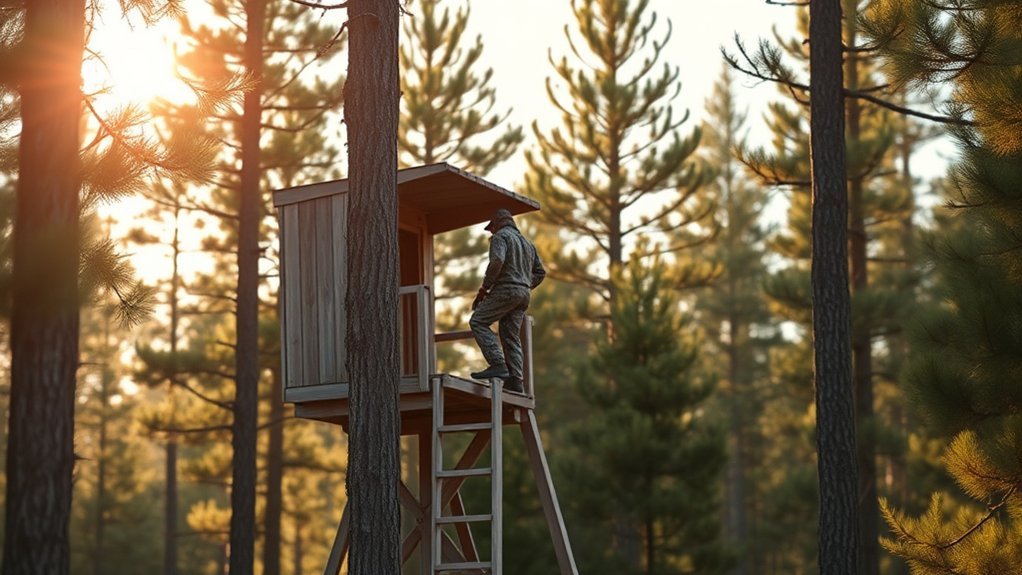
There are several main types of hunting stands, each designed for different situations and preferences. You’ll want to understand the advantages of ladder, climbing, hang-on, box, and elevated tower stands to choose what fits your needs best.
Comparing these options will help you make smarter decisions for your hunting setup. It’s all about finding what works best for you in the field.
Stand Categories Overview
How do you choose the right hunting stand for your needs? First, consider tree stands, which are popular for their versatility and concealment.
Ladder stands are stationary tree stands attached to a tree with a ladder, offering stable platforms for one or two hunters. Climbing stands, another tree stand type, let you easily ascend and descend trees thanks to their lightweight platform and seat design.
Hanging stands, similar to ladder stands but without a ladder, use chains or cables to attach to trees, providing flexibility in placement.
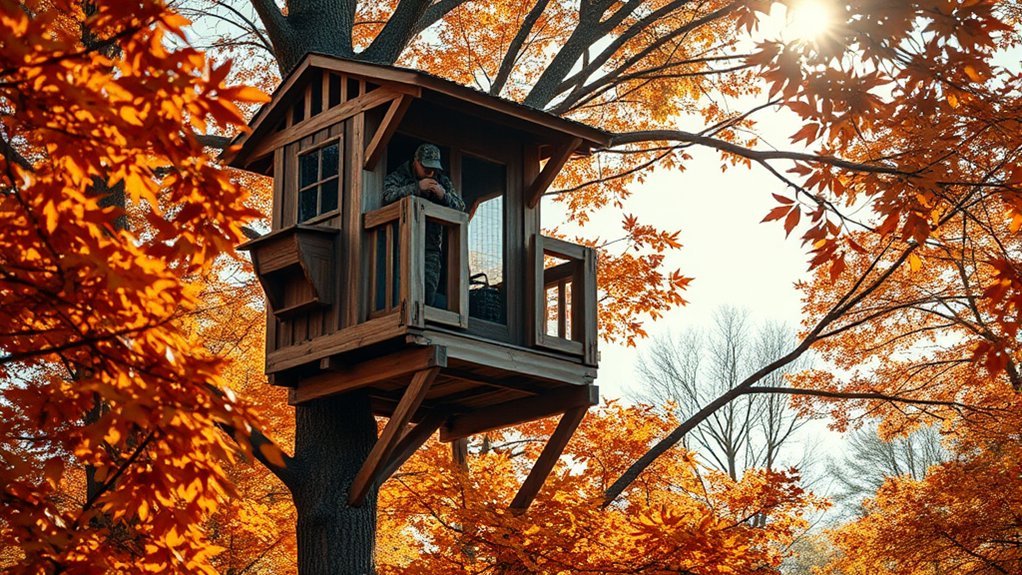
Beyond tree stands, box blinds are large, enclosed structures made from lumber or plywood. They’re typically set along field edges, offering excellent concealment and shelter from the elements.
Each stand category suits different hunting styles and terrain. So, think about what fits your needs best before making a choice!
Stand Advantages Comparison
Why choose one type of hunting stand over another? It really depends on your needs and hunting style. Ladder stands offer stability and easy access, which is perfect if you want a steady, long-term spot for one or two hunters.
If you value mobility, climbing stands let you move between trees quickly while staying elevated. Hang-on stands are lightweight and portable but require extra effort to set up. They’re ideal for short-term use.
For better concealment and space, elevated hunting houses and tower stands give you large, enclosed platforms. However, they aren’t very portable.
Alternatively, ground blinds and natural concealment don’t elevate you but can be effective depending on the terrain and conditions. Choosing the right stand means balancing portability, stability, and concealment for your hunt.
How to Pick the Best Tree for Your Hunting Stand
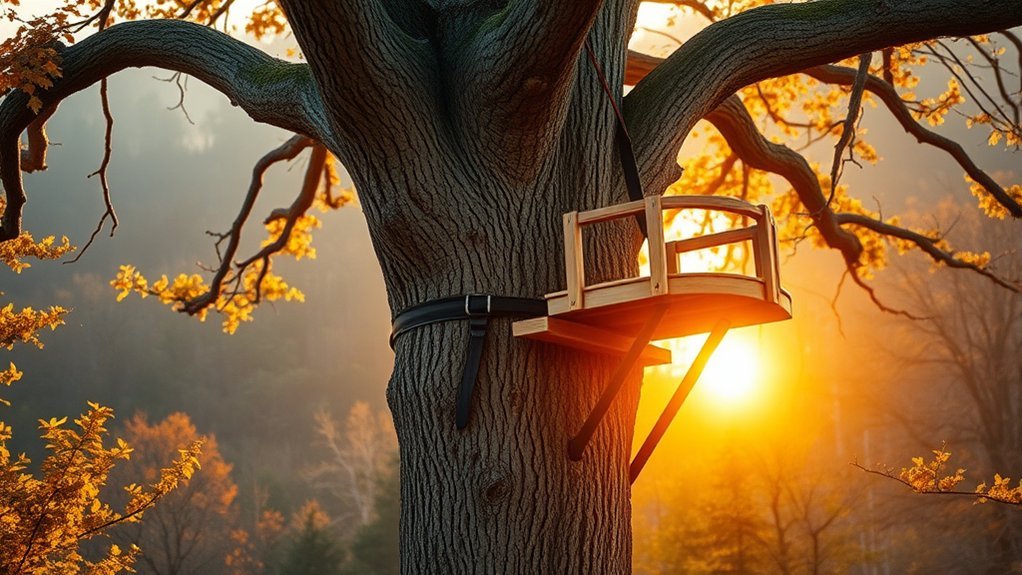
When choosing the best tree for your hunting stand, you’ll want to prioritize stability and safety by selecting a straight, healthy tree with a trunk diameter of at least 12 inches. Look for a tree free of rot, cracks, or damage that could jeopardize your stand’s security.
It’s also important to pick a tree with minimal branches at the height where you’ll set up your stand. This helps ensure a clear shooting lane and easy access.
Consider the tree’s location carefully—trees along known deer travel routes, near bedding areas, or close to feeding sites will increase your chances of success. Don’t forget to evaluate the tree’s orientation and sun exposure.
Aim for one that offers good cover and concealment during your hunt. By focusing on these factors, you’ll find the ideal tree to support your stand securely and boost your hunting experience.
How to Safely Set Up and Secure Your Tree Stand
To set up your tree stand safely, start by choosing a sturdy tree with the right trunk diameter for your straps. Always wear a safety harness and attach it securely before climbing to prevent falls.
Once you’re up, make sure the stand is tightly fastened and stable before settling in. It’s super important to double-check everything so you feel secure. Safety first, right?
Selecting The Right Tree
How do you pick the right tree for your hunting stand? When selecting, focus on a straight, sturdy tree with a trunk diameter between 8 to 12 inches to guarantee stable support.
Avoid trees with dead branches, loose bark, or signs of disease, as these can compromise safety during setup. Choose a tree with minimal lean or trunk angle to prevent your stand from shifting or tipping.
Position your stand at a height of 15 to 20 feet for the best balance of concealment, safety, and accessibility. Use tree-friendly web straps or ratchet straps to securely fasten the stand without damaging the bark.
Careful selecting and setup ensures a safe and reliable hunting experience every time. It’s all about being safe and comfortable out there!
Using Safety Harnesses
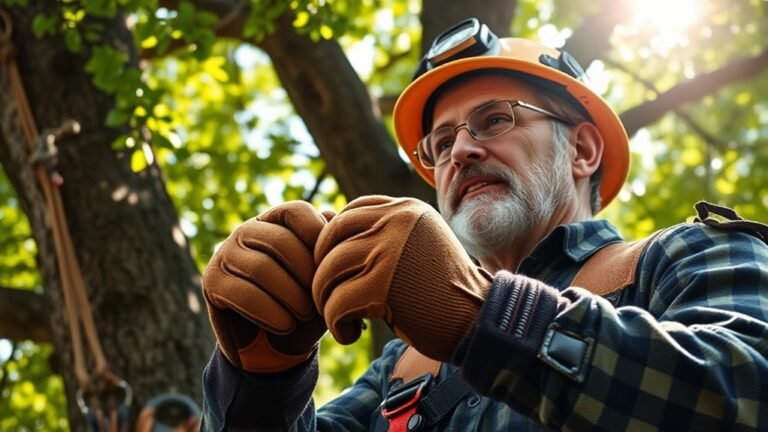
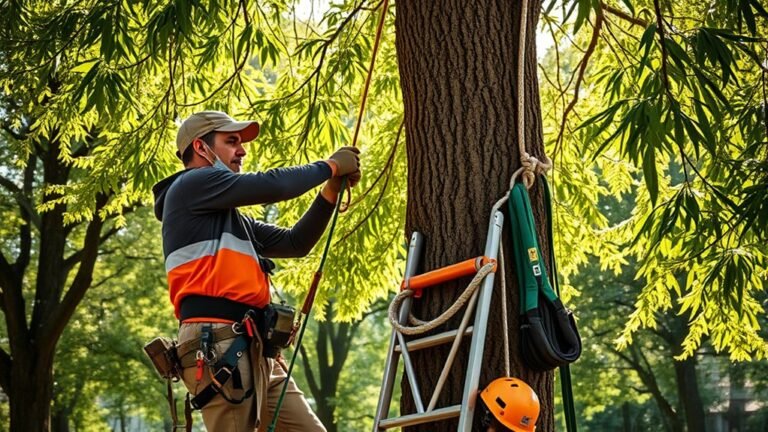
Although setting up your tree stand is important, wearing a properly fitted safety harness is crucial to prevent falls and guarantee your safety. Always choose a full-body safety harness designed specifically for tree stand use. It offers better support and protection than belt-style harnesses.
Before you climb, securely attach your harness to the tree or a lifeline, making sure it remains connected at all times. Use a safety line or lanyard that slides smoothly along the tree or cable system to maintain continuous attachment while you move.
Double-check all straps, buckles, and connections to ensure everything is secure before ascending or descending. By following these steps, you’ll considerably reduce the risk of injury and enjoy a safer hunting experience.
Securing The Stand Properly
Before you hang your tree stand, make sure the tree trunk is stable, straight, and positioned at a safe angle. This step is vital to guarantee your stand’s security and your safety.
Always follow the manufacturer’s instructions closely when positioning your stand and straps. Use sturdy straps to tightly secure the stand to the tree, preventing any wobbling or shifting during use.
Don’t rush the setup—double-check that all straps are properly fastened and that the stand feels solid. Additionally, wear a safety harness and use a lifeline while installing or climbing to minimize fall risks.
Use climbing aids if needed, and never skip safety checks. Properly securing your tree stand with the right straps ensures a safe and successful hunting experience.
Safety Gear You Need: Harnesses and Lifelines
Why is wearing a safety harness absolutely vital when using a hunting stand? Harnesses keep you securely attached to the tree, preventing dangerous falls. Without one, a slip or misstep could lead to serious injury or worse.
Lifelines complement harnesses by providing a continuous, safe connection from the ground to your stand, allowing you to move confidently.
When choosing and using your safety gear, keep these points in mind:
- Use a full-body harness to evenly distribute force during a fall and reduce injury risk.
- Attach your harness to the lifeline or tree anchor points with quick-clip connectors or carabiners.
- Always inspect harnesses and lifelines for wear or damage before each use.
- Make certain of proper fitting; a loose or tight harness can compromise safety.
- Install lifelines from the base to your stand for continuous protection while climbing or hunting.
Wearing the right safety gear isn’t optional—it’s vital for a secure hunting experience. Don’t skip it!
How to Climb and Use a Climbing Tree Stand Safely
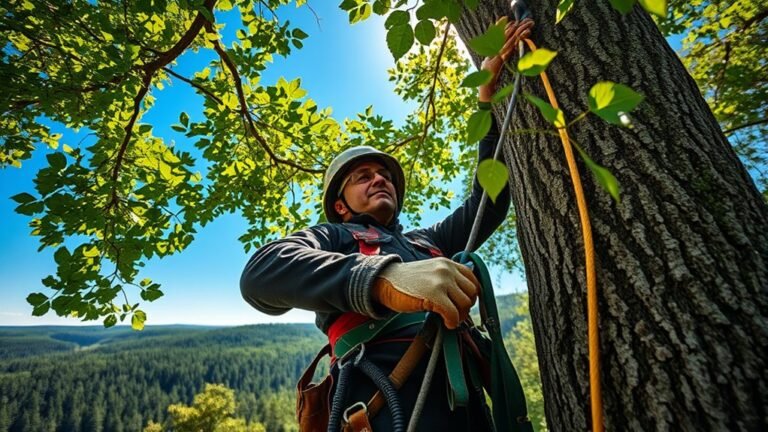
Before you start climbing, make sure your full-body harness is on correctly and securely attached to the tree’s safety line.
Check that your stand is tightly fastened and stable before you step up. Always climb slowly, keeping three points of contact to stay safe as you ascend.
Taking it slow really helps you stay balanced and avoid slips. Just focus on each step and you’ll be good to go!
Proper Harness Usage
Although climbing a tree stand might seem straightforward, using a proper harness is vital for your safety every step of the way. A full-body safety harness connected to the tree with a lifeline before you start climbing prevents serious falls.
Remember, never attach the harness to the stand until it’s securely fastened to the tree. Using a pull-up rope or gear bag helps you hoist your gear without losing balance.
Always keep three points of contact while climbing—it’s essential for stability. Finally, follow the manufacturer’s guidelines strictly to guarantee your harness and stand work as intended.
- Wear a full-body safety harness connected to the tree before climbing
- Attach harness to the stand only after securing the stand to the tree
- Use a pull-up rope or gear bag to lift equipment safely
- Maintain three points of contact while climbing
- Follow manufacturer’s instructions for harness use
Secure Stand Attachment
How do you guarantee your climbing tree stand stays secure and safe throughout your hunt? First, make sure to achieve a secure stand attachment by properly fastening the stand to the tree with sturdy straps or chains.
After positioning the stand, tighten all straps, bolts, and connections. Check for wear or damage before climbing.
Always attach your safety harness securely to the tree before ascent and remain clipped in at all times. Use a lifeline with a Prussic knot to continuously connect your harness to the tree.
This provides a vital backup if you slip. This secure stand attachment combined with your harness setup ensures stability and safety as you prepare for your hunt.
Prioritize these steps to avoid accidents and enjoy a confident, secure experience.
Safe Climbing Techniques
When you climb a tree stand, always wear a full-body safety harness and connect it to a secure safety line to protect yourself from falls. Before you start ascending, make sure the climbing stand is properly adjusted and secured on the ground.
Use three points of contact—two hands and one foot or two feet and one hand—to maintain stability. Climb slowly, checking each step carefully to avoid slips or sudden movements.
Once in the stand, keep your body centered to maintain balance. And never climb or descend while carrying extra gear that might throw you off.
- Always wear a full-body safety harness connected to a safety line
- Use three points of contact when climbing or descending
- Secure the climbing stand firmly before use
- Climb slowly and deliberately, checking each step
- Keep your body centered and avoid carrying gear while climbing
Positioning Your Tree Stand for Wind and Visibility
Since deer have an acute sense of smell, you’ll want to position your tree stand so the prevailing wind carries your scent away from their travel routes. Place your stand on the downwind side of key areas like feeding, bedding, or travel corridors to keep your scent from alerting deer.
Before setting up, always check the wind direction; avoid locations where wind patterns are unpredictable. Use natural cover—dense foliage or cedar branches—to help conceal both your scent and silhouette relative to the wind.
Proper positioning also improves visibility, allowing you to spot deer without being detected. Remember to adjust your stand placement seasonally, as wind patterns and deer movements change throughout the year.
Creating Quiet Access Routes to Your Hunting Stand
Although you might have the perfect tree stand location, getting there quietly is just as important to avoid spooking deer. Creating quiet access routes to your hunting stand guarantees you maintain stealth from the moment you leave your vehicle until you settle in.
Here’s how you can minimize noise and stay undetected:
- Clear a winded path using a mower, rake, or weed eater to reduce noise from vegetation.
- Remove crunchy leaves, snapping twigs, and other sound-making debris along the route.
- Move slowly and deliberately, avoiding sudden movements that might alert deer.
- Use natural cover such as bushes or tall grass to conceal your approach to the stand.
- Design entrance and exit routes to keep your movements downwind and out of the deer’s hearing range.
Tips for Trimming Shooting Lanes Without Spooking Deer
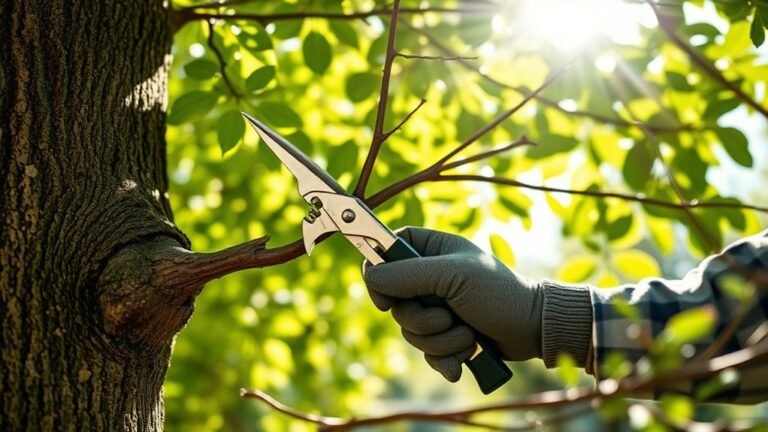
Once you’ve established quiet access routes to your hunting stand, the next step is ensuring your shooting lanes are clear without disturbing nearby deer. Trim small branches and foliage carefully using a pruning saw or clippers, focusing only on what’s necessary to maintain natural concealment.
Avoid over-trimming, as an overly disturbed area can alert deer to your presence. Choose calm weather or early morning hours when deer are less active to reduce the risk of spooking them.
Clear leaves and debris from the shooting lanes to improve visibility and decrease visual detection. Move quietly and deliberately while trimming, and carry a small brush or cloth to wipe off any noise or disturbance caused during the process.
How to Use Trail Cameras to Scout Your Hunting Stand
How can you get a clearer picture of deer activity around your hunting stand? Trail cameras are your best tool for scouting. By placing them near your stand, you can monitor deer movements and identify patterns without disturbing the area.
To maximize their effectiveness, consider these tips:
- Position trail cameras at the right height and angle for clear shots without spooking deer.
- Use camouflage and scent-free methods when setting up and maintaining cameras.
- Check footage regularly to spot peak activity times before heading out to hunt.
- Mark camera locations with GPS or on a map to track the most active zones.
- Rotate cameras if necessary to cover multiple angles and improve coverage.
Using trail cameras strategically helps you understand where and when deer are most active. This gives you a significant advantage in planning your hunting sessions from your stand.
Frequently Asked Questions
What Not to Do in a Deer Stand?
You shouldn’t make loud noises or sudden movements that scare deer away. Don’t skip safety checks on your harness or the stand’s stability before climbing.
Also, avoid overpacking your pockets or carrying noisy gear that could cause imbalance. It’s important to stay steady up there.
Never leave scent-covered clothes or gear exposed, as deer can detect it. And please, don’t climb or descend without proper safety equipment or securing yourself first—it’s dangerous and really ups the risk of falls.
What Color Can Deer Not See?
Deer can’t really see red or orange colors well, so those colors appear dull or almost invisible to them. This means if you wear blaze orange while hunting, deer won’t notice you easily, but other hunters will.
You should stick to bright orange for safety and use earth tones or camouflage to blend in. Knowing this helps you stay safe without spooking deer during your hunt.
Is It Better to Hunt in a Stand or on the Ground?
If you want to instantly become a stealthy hunting ninja, hunting in a stand is way better than on the ground! You’ll see way more, stay hidden from nosey deer, and avoid making noise that scares game off.
Sure, ground hunting gives you freedom to move, but it’s like shouting “I’m here!” to animals. So, if you want the upper hand, get yourself up in a stand and watch the magic happen!
What Should You Carry With You in a Hunting Stand?
You should carry a safety harness and life line to keep yourself secure in the stand. Don’t forget a pruning saw or small axe to clear shooting lanes.
Bring essential tools like a compass, rangefinder, and multi-tool for adjustments. A first aid kit is a must for emergencies, plus water, snacks, and weather-appropriate clothing to stay comfortable and alert during long waits.
Staying prepared keeps you safe and ready. It’s all about making sure you have what you need to enjoy the hunt without any surprises.
Conclusion
Using a hunting stand is like having a secret lookout in nature’s theater—giving you the perfect vantage point to blend into the scene. By choosing the right tree, setting up safely, and positioning your stand wisely, you’ll increase your chances of success while staying secure.
Remember, safety gear is your lifeline, and quiet movement is your best friend. With patience and practice, your hunting stand becomes the key to accessing unforgettable outdoor experiences.