How Do You Become an Arborist in 7 Essential Steps?
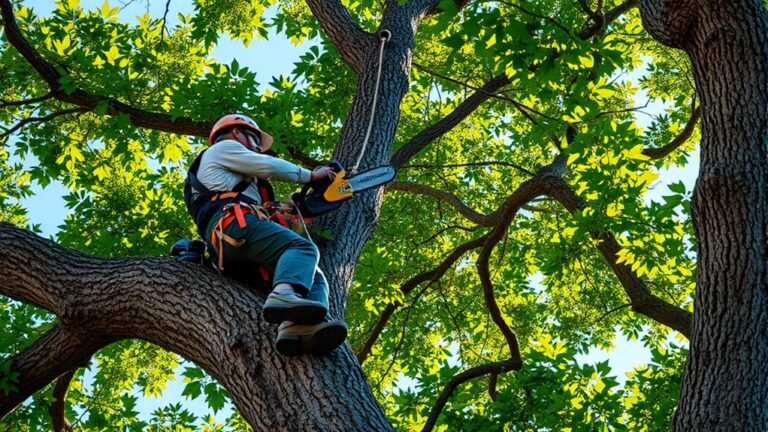
To become an arborist, start by getting the right education and hands-on training in tree care. Learn essential safety practices and gain practical experience working under supervision.
Check if your state requires a license and meet those criteria. It’s important to know the rules before you move forward.
Apply for ISA certification and prepare for the exam thoroughly. This step really helps prove your skills.
Develop specialized skills like tree identification and pest diagnosis. These will set you apart in the field.
Finally, join arborist networks to grow your expertise and stay updated on industry trends. Keep exploring to uncover all the key steps involved.
Key Takeaways
- Obtain a high school diploma and pursue vocational training or college courses related to arboriculture. This will give you a solid foundation to start with.
- Gain at least 3,000 hours of supervised hands-on experience in tree care and maintenance. Getting practical experience is key to really understanding the job.
- Develop tree identification, pest diagnosis, and pruning skills through practical fieldwork and observation. These skills come with time and close attention to detail.
- Prepare for and pass the ISA Certified Arborist exam by studying key concepts and documenting work experience. It’s important to be well-prepared for this certification.
- Follow safety protocols, meet any state licensing requirements, and engage in continuous learning and networking. Staying safe and connected helps you grow in the field.
Get the Right Education and Training in Arboriculture
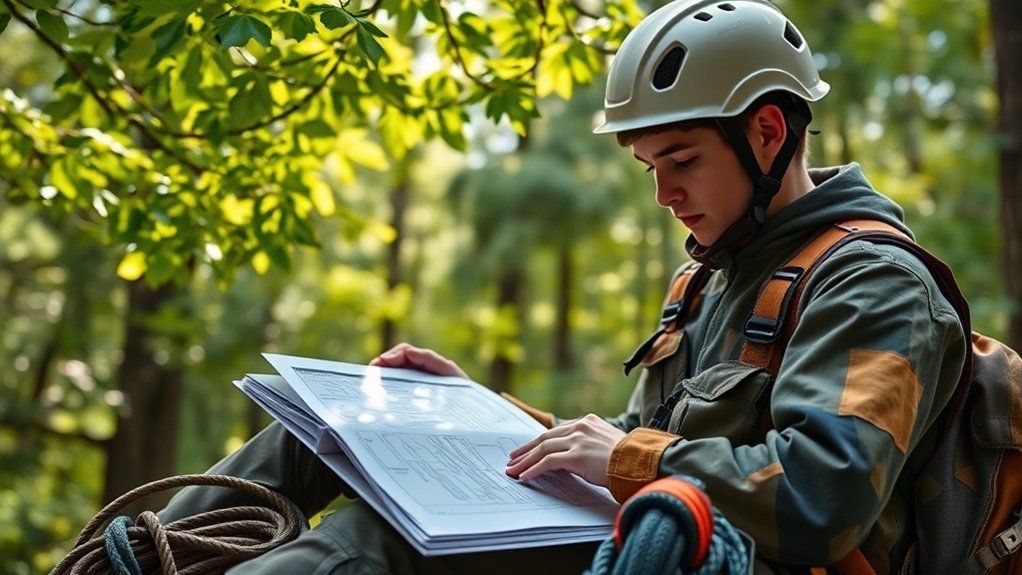
Before you can start working with trees professionally, it’s important to get the right education and training in arboriculture. First, make sure you have a high school diploma or equivalent. This provides a solid foundation.
From there, consider pursuing vocational training, college courses, or an associate degree in arboriculture, horticulture, or related fields to build your core knowledge. Hands-on experience is vital, so try working in tree care, landscaping, or forestry to develop practical skills.
On-the-job training will teach you essential pruning techniques, equipment operation, and safety practices under supervision. To move toward becoming a certified arborist, study key concepts like tree biology and maintenance procedures through recommended books and resources.
This preparation guarantees you’re ready for certification exams and sets you apart in the field. Getting the right education and training is your first step to a successful arboriculture career.
Learn Essential Health and Safety Practices for Arborists
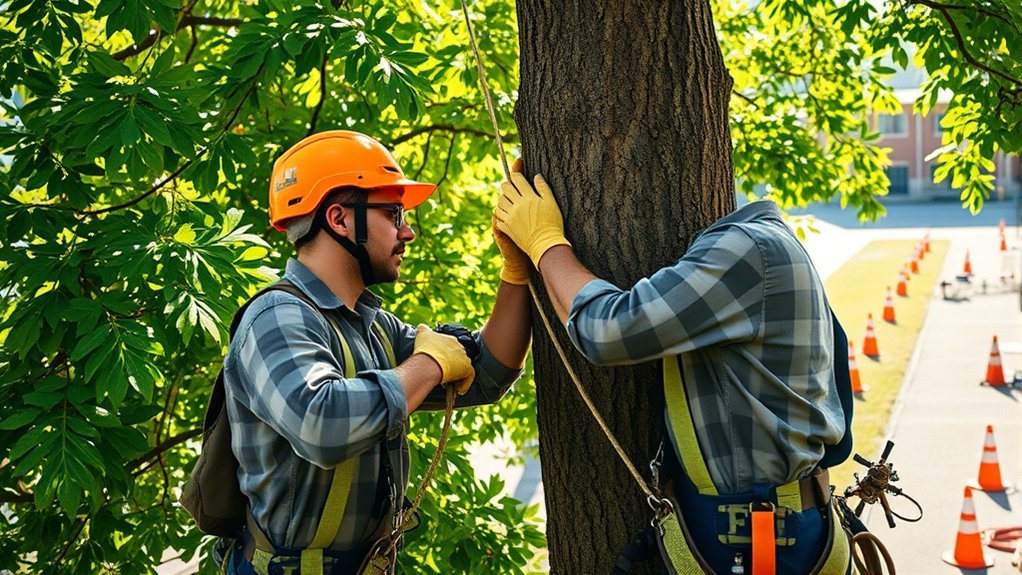
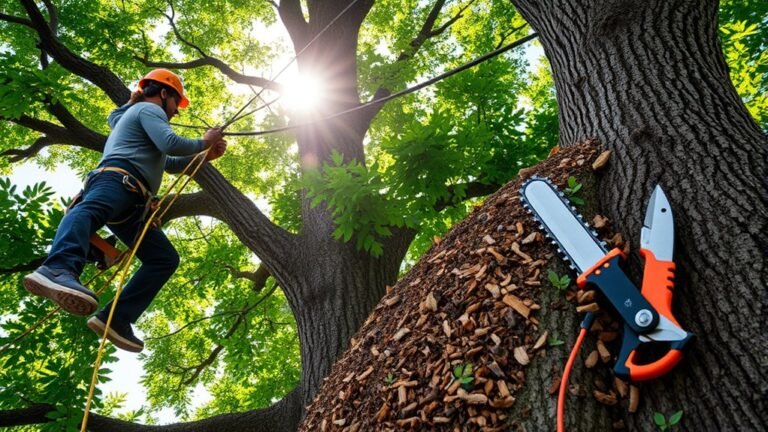
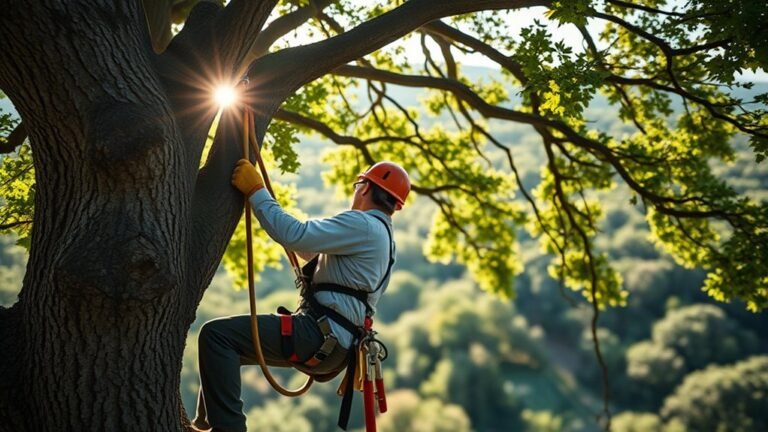
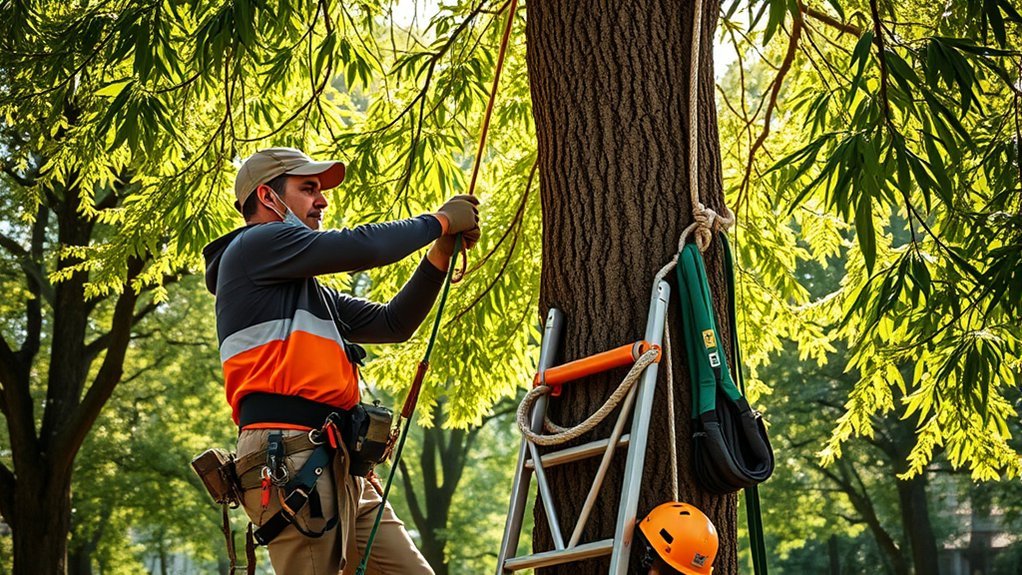
With the right education and training under your belt, it’s equally important to focus on health and safety practices to protect yourself on the job. Wearing proper safety gear—helmets, eye protection, gloves, and chainsaw-resistant clothing—is vital to prevent injuries while working in the field.
You’ll also need to understand and follow OSHA and ANSI safety standards, which guide safe climbing, pruning, and tree removal operations. Regular training on safe work practices, like proper ladder placement and using harnesses correctly, helps reduce the risk of falls and accidents.
Before starting any job, conducting a thorough hazard assessment will allow you to identify and address potential dangers in the tree or work area. Staying current with safety certifications such as First Aid and CPR is essential, as it prepares you to respond effectively to emergencies on-site.
Prioritizing these safety practices ensures you can work confidently and minimize risks every day. It’s all about keeping yourself safe so you can get the job done right.
Gain Practical Arborist Experience On the Job
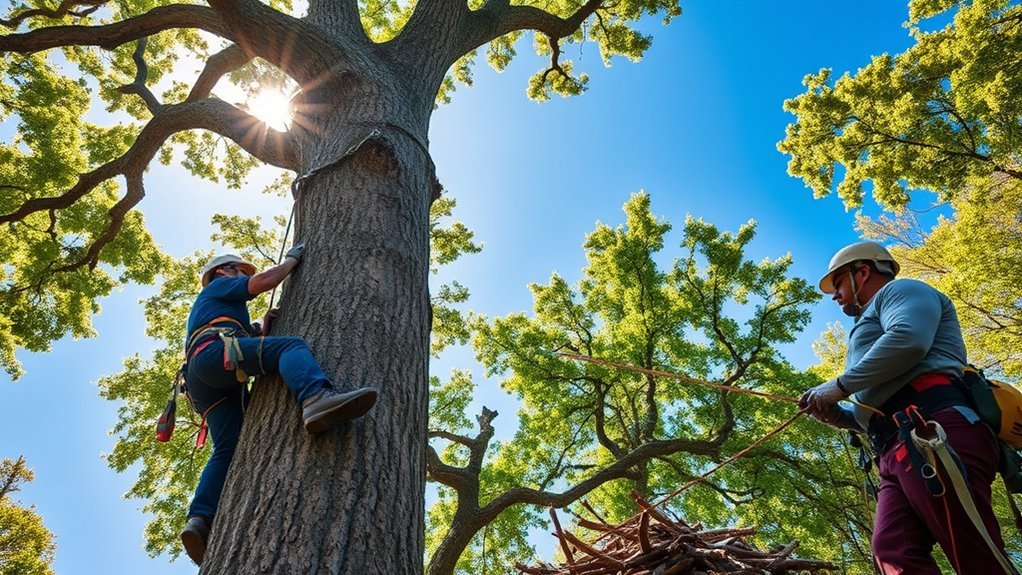
Building your skills through practical experience is an essential step in becoming a competent arborist. To gain practical arborist experience, you’ll need to accumulate at least 3,000 hours of hands-on work, often under the supervision of a licensed or experienced arborist.
This mentorship helps you develop key skills like pruning, climbing, and following safety procedures. Make sure to document every tree care task you perform, noting dates, descriptions, and having your supervisor verify your work.
Diversify your experience by working in planting, soil management, pest control, and hazard assessments to build a well-rounded skill set. Always be on the lookout for opportunities to improve your techniques through on-the-job training.
This practical arborist experience not only sharpens your abilities but also meets requirements for certification, putting you on the right path to becoming a professional in the field.
Find Out If You Need a State Arborist License
Only seven states require a specific arborist license, so you’ll want to check whether your state is one of them before pursuing formal credentials. These states include California, Connecticut, Hawaii, Louisiana, Maine, Maryland, and Rhode Island.
If you live in Maryland, for example, state licensing demands three years of experience working with a licensed arborist or one year of experience combined with two years of college education. Connecticut requires passing a tree identification test and a $200 fee to obtain its arborist license.
Most other states don’t require a license, instead relying on practical, on-the-job training and experience to verify your skills. State licensing requirements, fees, and eligibility criteria vary widely, so it’s essential to research your state’s specific regulations early on.
Knowing whether you need a license will help you focus your efforts and avoid unnecessary hurdles on your path to becoming a certified arborist. It’s always better to be prepared!
Apply for ISA Arborist Certification and Prepare for the Exam
You’ll need to create an account on the ISA website and complete your certification application. Make sure to include all required work experience documents.
To get ready for the exam, study the ISA Certified Arborist Study Guide and focus on key topics. It really helps to concentrate on the areas that matter most.
Once your application is verified, you can register to take the exam. You have the option to do this either in person or online at authorized centers.
Certification Application Process
How do you get started with the ISA Arborist Certification application? The certification application process is straightforward but requires careful preparation.
First, create an account on the ISA website to access and download the application forms. Next, gather and verify your work experience documentation—this usually means at least three years of arboriculture work, supported by letters or logs from employers.
Then, submit your completed application as a PDF and wait for approval. Finally, once approved, follow ISA’s instructions to schedule your exam at authorized testing centers.
Exam Study Strategies
Wondering what it takes to ace the ISA Arborist Certification exam? First, make sure you’ve applied and received approval from ISA by submitting your application along with your verified work experience or education.
For effective exam preparation, rely heavily on the ISA Certified Arborist Study Guide and recommended resources. Don’t just study theory—practice identifying tree species, proper pruning techniques, and pest damage in the field.
Focus on key terminology and applying your knowledge to real-world scenarios to deepen understanding. Joining study groups or online forums can also boost your motivation and provide valuable tips during your study process.
With a solid study plan and hands-on practice, you’ll be well-equipped to pass the ISA arborist certification exam confidently.
Work Experience Verification
When exactly should you start gathering your work experience records for ISA certification? Ideally, you should keep detailed logs from day one. For work experience verification, these records prove your hands-on skills and job responsibilities in arboriculture.
Here’s how to prepare:
- Document hours spent on tasks like pruning, planting, removal, and safety.
- Guarantee a licensed arborist or employer supervises or verifies your work.
Next, complete the ISA application online and upload your verification documents in PDF. Be ready to provide extra documentation or clarifications if requested during the verification process.
Keeping consistent, accurate records really makes work experience verification easier. It helps you confidently apply for ISA certification and move forward in your arborist career.
Develop Specialized Arborist Skills in Tree Care and Identification
You’ll need to sharpen your ability to identify different tree species and understand their unique needs. Practicing proper pruning and removal techniques will build your hands-on skills for maintaining tree health.
Plus, learning to spot signs of pests and root problems is key to diagnosing and treating issues early. It really helps you stay ahead of any potential damage.
Tree Identification Techniques
Although tree identification might seem challenging at first, mastering it is essential for any arborist. Developing your tree identification skills helps you understand various species and their care needs.
To get started, focus on these techniques:
- Study leaf shapes, bark textures, and growth habits to differentiate species.
- Practice identifying trees in different seasons, noting changes like leaf loss or fruit appearance.
- Use tools such as field guides, dichotomous keys, and mobile apps for accurate classification.
- Conduct hands-on observations of branching patterns, flowers, and root systems, documenting your findings with photos and notes.
Pruning and Removal Practices
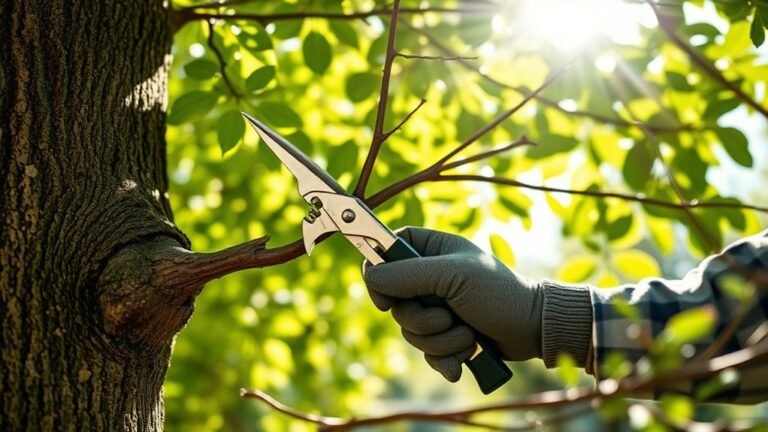
Since proper pruning and removal are vital to maintaining tree health and safety, you need to master specialized techniques tailored to different species and situations. Pruning involves making clean cuts at the right angles to encourage healthy growth and prevent disease.
You’ll also need to identify various tree species to apply the most appropriate pruning and removal methods. Recognizing signs of decay, pest damage, or structural problems helps you decide when specialized pruning or removal is necessary.
Additionally, mastering safety protocols and using the right tools—like pruning saws and pole pruners—ensures precise and safe work. Finally, developing the skill to assess hazardous trees and execute proper removal techniques is essential to protect both the tree’s environment and those around it.
Pest and Root Diagnosis
When diagnosing tree health issues, honing your skills in identifying pests and root problems is crucial. Pest diagnosis means you need to recognize common pests like aphids, borers, and scale insects. It’s also important to understand how these pests affect tree vitality.
You also have to detect root issues such as root rot, girdling roots, and soil compaction. This usually requires careful inspection and some testing.
To really excel, focus on a few key areas:
- Learning diagnostic techniques like soil analysis, tissue sampling, and pest trapping.
- Identifying visual symptoms of pest infestations and root damage.
- Applying pest management strategies, including both biological and chemical controls.
- Staying updated on new pests, diseases, and diagnostic advancements.
Mastering these skills will make sure you can accurately diagnose and treat tree health problems. That way, you can provide effective care that helps trees thrive.
Join Arborist Networks and Grow Your Expertise
If you want to deepen your knowledge and stay updated in the arboriculture field, joining arborist networks is essential. Connecting with ISA Certified Arborists through online forums like ISA Connect, Facebook, and LinkedIn helps you exchange valuable tips and experiences.
You’ll also benefit from participating in local chapters, such as the Florida Chapter ISA. Here, you can attend workshops, conferences, and certification prep courses.
Mentorships with seasoned arborists provide hands-on guidance, accelerating your career growth. Engaging actively in these networks sharpens your skills and keeps you informed about industry trends.
| Network Type | Benefits |
|---|---|
| Online Forums | Peer discussions, tips sharing |
| Social Media Groups | Industry news, event updates |
| Local Chapters | Networking, educational events |
| Conferences & Workshops | Expert knowledge, certifications |
| Mentorship Programs | Practical insights, career advice |
Frequently Asked Questions
How Long Does It Take to Become an Arborist?
It usually takes you about 3 to 5 years to become an arborist if you combine work experience with study. You’ll spend months preparing for the certification exam, which is key to becoming officially recognized.
Do Arborists Make a Lot of Money?
You won’t exactly strike gold like a prospector, but arborists can still earn a respectable living. Depending on where you work and your experience, salaries usually range from $36,000 to $65,000.
If you get certified or specialize in areas like risk assessment, you could make over $70,000 annually. So, while you’re not cashing in like a tycoon, your skills definitely pay off if you grow them right.
What Qualifies You to Be an Arborist?
To qualify as an arborist, you’ll need a mix of education, experience, and skills. Usually, a high school diploma or GED is required, along with hands-on experience in tree care.
You’ll need to develop skills in pruning, safety, and evaluating tree health. Many states also require certification or licensing, so passing tests or proving work hours is important.
On-the-job training and continuous learning will help you meet these qualifications. It’s really about gaining knowledge and staying updated in the field.
How to Become an Arborist With No Experience?
Becoming an arborist with no experience is like planting a seed—you’ve got to start small and nurture growth. You can begin by volunteering with tree care groups or interning to get hands-on skills.
Study online or take community classes on tree care basics. Don’t forget to learn safety and equipment use.
Over time, you’ll build the roots of knowledge and experience needed to thrive in this field. It’s all about patience and steady progress.
Conclusion
So, becoming an arborist is just a walk in the park—if that park requires years of learning, hands-on experience, safety know-how, and passing tough exams.
But hey, who doesn’t want to climb trees for a living, right?
With the right education, licenses, and a network of experts, you’ll be more than just a tree hugger—you’ll be the go-to pro for keeping our leafy friends healthy.
Ready to get your hands dirty?