What Is an Arborist and What Do They Do
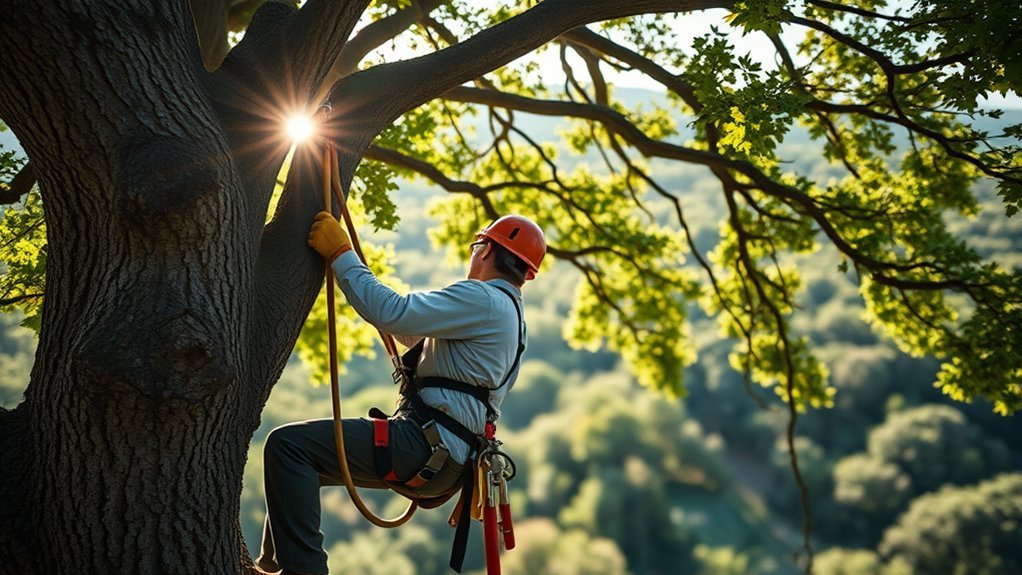
An arborist is a trained tree care professional who helps you keep your trees healthy, safe, and thriving. They prune, diagnose diseases, assess soil and roots, and handle hazardous tree removal when needed.
Certified arborists follow strict safety practices and industry standards to protect your property and the public.
If you want to understand how they guarantee your landscape stays beautiful and safe while using specialized tools and techniques, there’s plenty more to explore.
Key Takeaways
- An arborist is a trained professional specializing in tree care, maintenance, planting, and health management. They know all about keeping trees healthy and looking great.
- They diagnose tree diseases, pests, and structural issues to ensure tree safety and longevity. Basically, they figure out what’s wrong with a tree and how to fix it.
- Arborists perform pruning, fertilization, inspections, and hazardous tree removals following industry standards. These tasks help trees grow strong and stay safe around people.
- Certified arborists have passed exams and adhere to professional ethics and ongoing education. So, they’re always up to date with the best tree care practices.
- They use specialized tools and safety practices, especially when working near power lines or hazardous conditions. Safety is a big deal in their line of work.
What Is an Arborist?
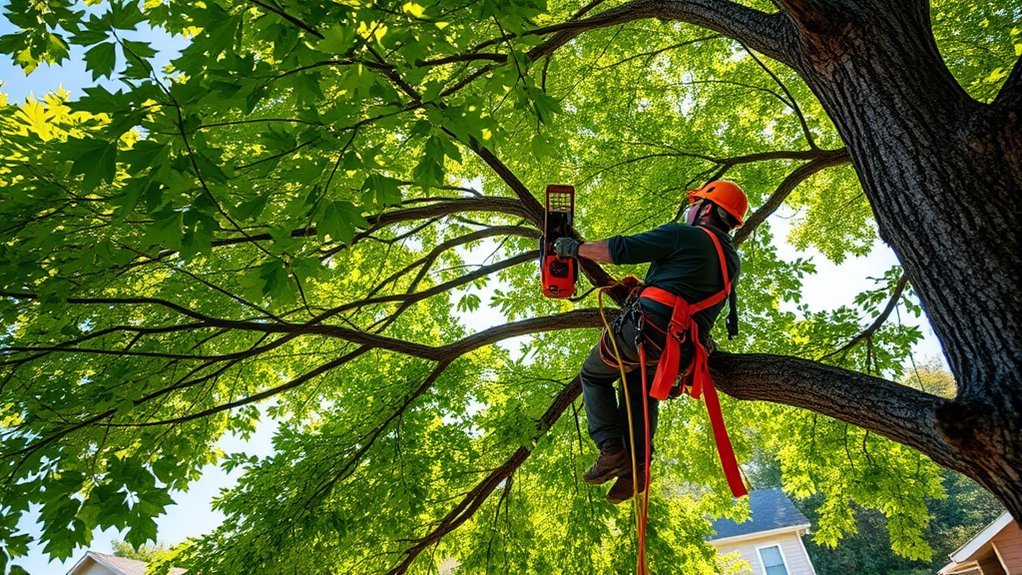
What exactly does an arborist do? An arborist is a trained professional specializing in tree care, focusing on the planting, maintenance, and health of trees and shrubs. Think of them as tree doctors who combine scientific knowledge with practical skills to guarantee your trees grow strong and healthy.
To become certified, arborists undergo extensive training, pass rigorous exams, and commit to ongoing education to stay updated on the latest tree care techniques and safety standards. Their expertise covers a range of tasks, including pruning, diagnosing diseases, planting new trees, and sometimes safely removing hazardous ones.
Why Arborists Matter for Tree Health and Safety
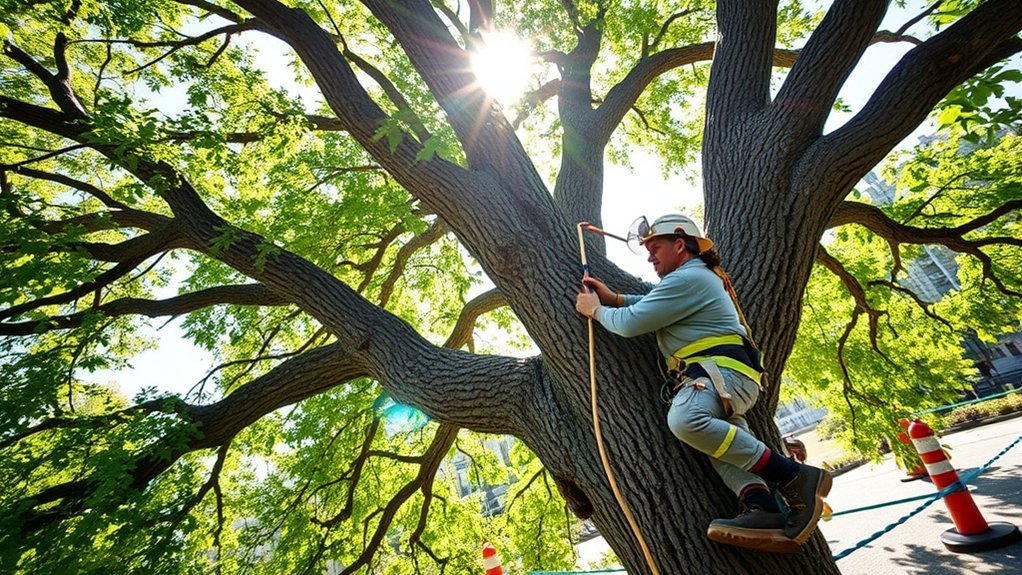
Why should you trust an arborist with your trees’ health and safety? Arborists are trained experts in tree care, skilled at diagnosing and treating diseases and pests that threaten your trees.
As a property owner, you benefit when they identify structural weaknesses early. This helps prevent hazards like falling branches or tree failure during storms.
Certified arborists follow industry standards designed to promote long-term tree well-being. This reduces risks to both people and nearby structures.
Their proper pruning and maintenance not only enhance safety but also preserve the environmental and property value of mature trees.
Regular assessments by an arborist help you maintain healthy trees. This way, your landscape stays safe and attractive over time.
How Arborists Assess Tree Health and Diagnose Issues
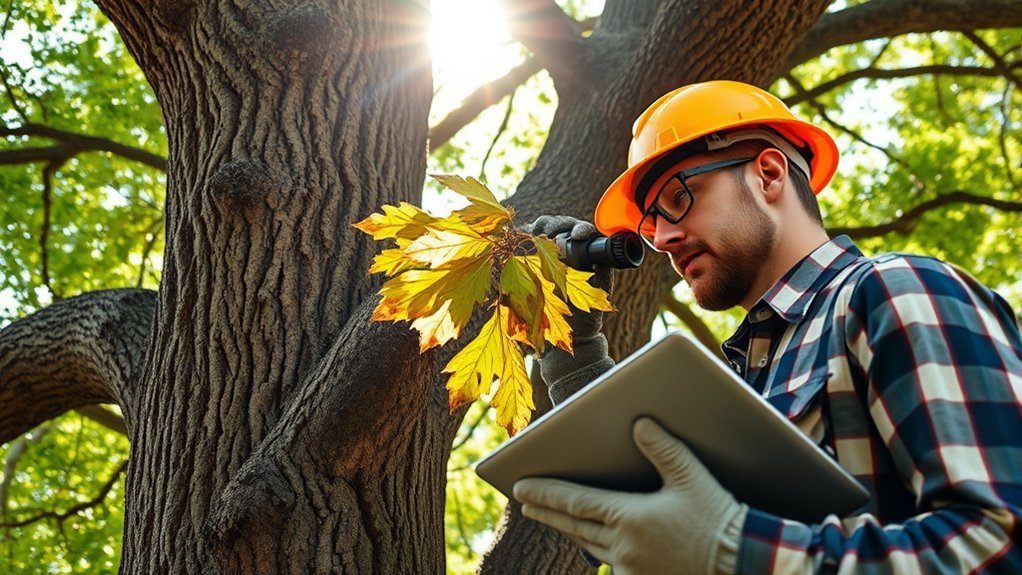
When you want to understand a tree’s health, arborists start with a careful visual inspection of leaves, branches, and the trunk for any signs of disease or pests. They also analyze soil and root conditions to spot issues that might not be visible above ground.
This thorough approach helps them diagnose problems accurately and recommend the best care. It’s all about getting to the root of the problem—literally!
Visual Tree Inspections
Although you might not notice it, arborists rely heavily on visual tree inspections to assess a tree’s health and diagnose potential problems. During these visual inspections, they closely examine leaves, branches, trunks, and roots for signs of decay, damage, or other issues affecting tree health.
Spotting safety hazards like cracks or deadwood is essential to prevent accidents.
Here’s what arborists focus on during a visual tree inspection:
- Identifying physical damage such as splits or broken limbs that could threaten safety hazards.
- Checking for environmental factors like soil quality and nearby construction impacting tree stability.
- Observing signs of pests or fungi that might weaken the tree’s health.
These detailed inspections help arborists recommend the best care to keep your trees safe and healthy.
Disease And Pest Identification
Visual inspections often reveal more than just physical damage—they can uncover signs of disease and pest infestations that threaten a tree’s health. When you look closely at the leaves, bark, and overall structure, you might notice discolored foliage, holes, or even insects and larvae. These are all common indicators of pest infestation.
Arborists use diagnostic tools like microscopes and tissue sampling to accurately identify specific pests or pathogens affecting the tree. Through careful disease identification, they distinguish between fungal infections, bacterial blights, and other issues by analyzing symptoms and samples.
This precise diagnosis allows them to recommend targeted treatments, helping you control pests and prevent further damage. Ultimately, this approach maintains your tree’s health and longevity.
Soil And Root Analysis
How can you tell if your tree’s health issues stem from beneath the surface? Arborists rely on soil analysis and root inspection to uncover hidden problems affecting your tree. They use tools like soil probes and test kits to assess nutrient levels, pH, and compaction.
Sometimes, they perform root excavation to check for girdling roots or decay. This thorough evaluation helps identify deficiencies or damage that may stunt growth or cause disease.
Here are three key steps arborists take during soil and root analysis:
- Collect soil samples for lab or in-field testing to determine nutrient imbalances.
- Inspect root structures through trenching to detect damage or abnormal growth.
- Recommend soil remediation techniques like fertilization or aeration to restore tree health.
This process ensures your tree gets the care it truly needs.
Key Tree Care Services Offered by Arborists
When it comes to keeping your trees healthy, arborists offer essential maintenance like pruning and fertilization. They also provide expert disease diagnosis to catch issues early and protect your trees.
Understanding these services helps you guarantee your trees stay strong and vibrant. It’s all about giving your trees the care they need to thrive.
Essential Tree Maintenance
Why does proper tree maintenance matter? It’s crucial for ensuring your trees remain healthy, safe, and visually appealing.
Arborists specialize in tree care by using expert pruning techniques like crown raising and crown reduction to improve safety and aesthetics while minimizing stress on the tree. They also employ specialized equipment to manage trees safely in urban settings.
Here are three key aspects of essential tree maintenance:
- Pruning – Enhances tree health by removing dead or dangerous branches and promoting growth.
- Fertilization – Provides necessary nutrients to support tree vigor.
- Regular Inspections – Detect early signs of stress or damage to prevent problems.
Disease Diagnosis Services
What signs should you watch for when your tree isn’t feeling well? Yellowing leaves, wilting, dead branches, or unusual growths may indicate underlying problems.
Arborists provide disease diagnosis services by evaluating these symptoms to protect your tree health. Using diagnostic tools like soil tests, tissue sampling, and thorough visual inspections, they identify specific pathogens such as fungal infections or pests causing damage.
Early and accurate disease diagnosis helps prevent infections from spreading and allows arborists to recommend effective treatments, including pruning, fertilization, or chemical applications.
When and Why Arborists Recommend Tree Removal
Although removing a tree is often seen as a last resort, arborists will recommend it if the tree is dead, severely diseased, or poses a safety risk to you or your property. They carefully assess the tree’s structural integrity, looking for internal decay, cracks, or instability that can’t be fixed.
If the tree becomes a safety hazard, removal is necessary to protect your home and loved ones.
Here are three common reasons arborists suggest tree removal:
- The tree is dead or beyond recovery due to disease or pests.
- Structural integrity is compromised, making the tree unstable or prone to falling.
- Storm damage or legal regulations require removal to avoid hazards or comply with rules.
Before recommending tree removal, arborists explore all treatment options to preserve the tree when possible. They want to make sure removal is truly the best choice for safety and property protection.
Understanding Arborist Certification and What It Means
When you hire a certified arborist, you’re working with someone who’s passed a tough exam and committed to ongoing education. The certification process shows they know their stuff, but it doesn’t automatically guarantee perfect work.
It’s important to understand both what certification proves and its limitations before making your choice. So, keep that in mind when you’re deciding who to trust with your trees.
Certification Definition Overview
How can you be sure an arborist truly knows their craft? Certification from the International Society of Arboriculture (ISA) is a key indicator. This voluntary credential shows that an arborist has the essential knowledge and competence in tree care.
Here’s what certification means for you: It demonstrates the arborist has passed an all-encompassing exam testing their expertise. It reflects a commitment to ongoing education, keeping their knowledge current with industry standards. It also indicates adherence to professional ethics and best practices.
While certification doesn’t guarantee perfect work, it sets a professional benchmark. When you choose a certified arborist, you’re trusting someone who’s dedicated to maintaining high standards and continually improving their skills.
Certification Process Explained
What does it take to become a certified arborist? To earn the ISA Certified credential, you need to meet specific experience and education requirements and pass a thorough exam.
This certification tests your knowledge in tree biology, pruning techniques, diagnosis, and safety procedures. By achieving this professional credential, you demonstrate a high level of expertise and commitment to industry ethics.
But it doesn’t stop there—you’ll also need to complete ongoing education to maintain your certification and stay current with evolving standards. While certification is voluntary, it helps distinguish you as a qualified tree care professional.
Understanding the certification process can guide you if you’re considering this path or hiring an ISA Certified arborist for your tree care needs.
Certification Limitations Clarified
Earning ISA certification shows you’ve got the knowledge and skills in tree care, but it doesn’t guarantee the quality of work you’ll receive. Certification measures your expertise, not the actual results or safety of the job.
Here’s what you should know about its limitations:
- Certification reflects your knowledge and commitment to professional growth but doesn’t assure consistent work quality on every project.
- Maintaining your certification requires ongoing education, keeping you updated on industry standards and best practices.
- Certification is voluntary and serves as recognition, not a formal guarantee of service quality or adherence to practice standards.
How Certified Arborists Differ From Other Tree Care Providers
Although you might find many tree care providers, certified arborists stand out because they’ve undergone rigorous training and passed thorough exams through the International Society of Arboriculture (ISA). This certification signals that they have a verified level of knowledge and competence in tree care practices.
Unlike some tree care providers who may lack formal training or proven expertise, certified arborists commit to ongoing education to keep up with industry standards.
Beyond knowledge, certified arborists follow a strict Code of Ethics emphasizing safety, professionalism, and environmentally responsible practices. While certification doesn’t guarantee the quality of every job, it does affirm you’re working with someone who meets recognized standards and values ethical conduct.
Safety Practices Arborists Follow Near Power Lines
Certified arborists don’t just bring expertise—they also follow strict safety measures, especially when working near power lines. Your safety depends on maintaining a safe distance from energized wires, usually at least 10 feet for low-voltage lines in urban settings.
Certification like the Qualified Line Clearance Arborist ensures they’re trained specifically to handle these hazards. So, you can trust they know exactly what they’re doing.
Here are three key safety practices arborists follow near power lines:
- Maintaining proper clearance to prevent electrical shocks or arc flashes.
- Using climbing techniques such as the Stationary Rope System (SRS) to minimize contact with power lines.
- Employing insulated tools and adhering to local regulations designed to protect both the arborist and the public.
These steps make sure everyone stays safe while the work gets done right.
Common Tools and Equipment Arborists Use
When you watch an arborist at work, you’ll notice they rely on a variety of specialized tools and equipment designed to make tree care safe and efficient. Chainsaws are a key tool, chosen for their power and safety features like chain brakes, allowing arborists to cut branches and trees effectively.
Climbing harnesses, ropes, and carabiners help arborists safely ascend and position themselves within trees, ensuring stability during complex tasks. You’ll also see pruning shears and loppers used for precise cuts on smaller branches to promote healthy growth.
Personal protective equipment is essential, too; helmets, gloves, eye protection, and high-visibility clothing shield arborists from hazards. After cutting, wood chippers turn branches and debris into mulch, simplifying cleanup.
Each tool and piece of equipment plays a vital role in the arborist’s ability to care for trees safely and skillfully, making their job both efficient and secure.
Choosing the Right Arborist for Your Tree Care Needs
If you want your trees to thrive, choosing the right arborist is essential. A certified arborist guarantees professional expertise, giving your trees the best care possible.
When selecting your tree care specialist, keep these points in mind:
- Certification and Experience: Look for a certified arborist through reputable organizations like the International Society of Arboriculture (ISA). Make sure they have experience with the specific tree care services you need, whether it’s pruning, planting, or disease diagnosis.
- References and Reviews: Ask for client references or check online reviews. This way, you can get a good sense of the arborist’s reliability and quality of work.
- Safety and Insurance: It’s important that the arborist follows industry safety standards, especially when working near power lines or in urban areas. Also, check that they have proper insurance coverage to protect you from any liability.
Frequently Asked Questions
How Much Does an Arborist Typically Charge?
Here’s your answer:
Arborist costs can come with considerable variation. You’ll typically pay between $75 and $150 per hour, depending on your project’s particulars.
Pruning or trimming trees usually runs from $200 to $700. Tree removal might range from $200 for smaller specimens to over $2,000 for larger, hazardous ones.
Don’t forget, extra services like stump grinding or storm response could add additional fees to your final figure. So, it’s a good idea to get a detailed estimate upfront.
What Are the Signs I Need to Hire an Arborist?
You need to hire an arborist if you notice dead or broken branches, cracks or splits in the trunk, or leaning trees that seem unstable.
If your tree’s leaves are discolored or wilting, or you spot fungi and pest damage like holes or sawdust, it’s time to call a pro.
Also, if trees are growing too close to power lines or buildings, an arborist can safely manage the risk for you.
How Many Years Does It Take to Become an Arborist?
It typically takes you around 3 to 7 years to become an arborist. You’ll need at least 3 to 5 years of hands-on experience in tree care, plus 1 to 2 years of formal education or training.
If you want to specialize or get advanced certifications, expect to spend an extra 1 to 3 years. So, be ready for a mix of practical work and study before you’re fully certified.
Do Arborists Make a Lot of Money?
If money were leaves on a tree, as an arborist, you could definitely gather a good handful. You won’t always rake in huge sums, but certified arborists typically earn between $40,000 and $60,000 a year.
With experience, specialized skills, or running your own business, you could see that climb above $80,000. So, while it’s not an instant fortune, with the right growth, you can earn a solid income.
Conclusion
You might see trees as just part of your yard, but to an arborist, they’re living, breathing beings needing expert care.
While you enjoy their shade and beauty, arborists work behind the scenes to keep them healthy and safe.
Choosing the right arborist means trusting someone who understands both the delicate life of a tree and the tough decisions, like removal, that protect your home and community.
It’s care you can’t see—but definitely feel.