What Does a Tree Surgeon Do?
A tree surgeon, also called an arborist, cares for your trees’ health and safety by pruning, trimming, removing diseased branches, and managing hazards. They use specialized tools and techniques to promote growth, stabilize weak branches, and handle storm damage safely.
Certified professionals follow strict safety protocols and local laws to protect your property. If you want to understand how they manage risks, perform removals, and keep trees thriving year-round, there’s plenty more to explore.
Key Takeaways
- Tree surgeons inspect trees for diseases, hazards, and structural issues to ensure safety and health. They really keep an eye out for anything that might be wrong with the tree.
- They prune, trim, and remove branches to promote healthy growth and prevent damage. It’s all about helping the tree stay strong and looking good.
- They manage hazardous or storm-damaged trees, including safe removal or emergency dismantling. When things get dangerous, they step in to handle it carefully.
- Tree surgeons install cabling and bracing to stabilize weak branches and enhance tree stability. This helps the tree stand firm, even in tough conditions.
- They use specialized tools and follow safety protocols to protect people, property, and trees during care. Safety is a big deal for them, both for themselves and everyone around.
Who Is a Tree Surgeon and What Do They Do
What exactly does a tree surgeon do? Tree surgeons, also known as arborists, specialize in tree care, focusing on the health, maintenance, and safety of trees.
If you hire one, you’ll find they’re trained professionals certified by the International Society of Arboriculture (ISA). This means they have the knowledge and skills required to care for your trees properly.
Their expertise covers planting new trees, pruning branches to promote growth, removing hazardous or dead trees, and treating diseases that affect tree health.
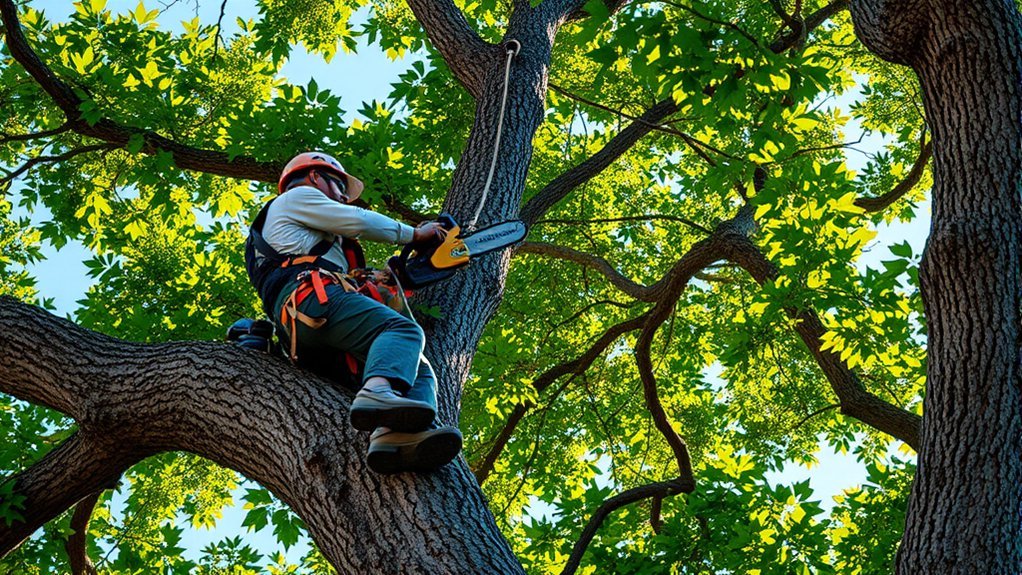
You’ll notice they use specialized equipment like chainsaws, rigging systems, and climbing gear to work safely and efficiently. Tree care isn’t just about keeping trees looking good—it’s about preventing hazards, improving the overall health of your trees, and even enhancing your property’s value.
Daily Tasks and Responsibilities of a Tree Surgeon
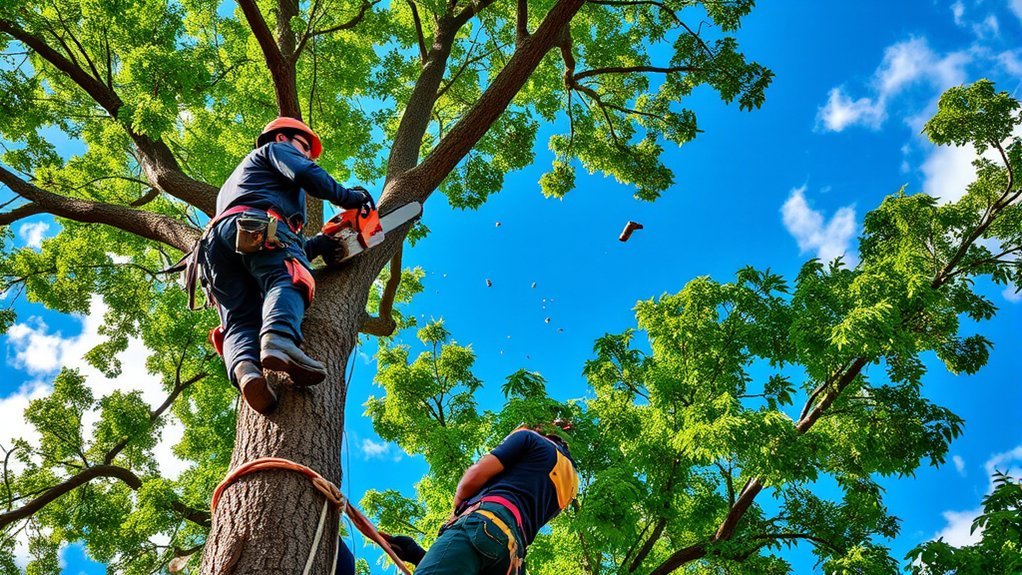
As a tree surgeon, you’ll focus on routine tree maintenance like pruning and trimming to keep trees healthy. You’ll also manage hazardous trees, especially when removal is needed to protect people and property.
These tasks require skill and specialized equipment to get the job done safely and effectively. It’s important to know what you’re doing to avoid any accidents or damage.
Routine Tree Maintenance
Although the work of a tree surgeon often goes unseen, you’ll find that routine tree maintenance is crucial for keeping trees healthy and safe. Tree care involves daily inspections to spot disease, hazards, or unstable branches.
You’ll regularly prune and trim to encourage growth and prevent risks. Watering, fertilizing, and treatments help protect against pests.
After storms, clearing debris ensures safety and accessibility. Monitoring soil and roots supports long-term tree vitality.
| Task | Purpose |
|---|---|
| Inspections | Detect health issues and hazards |
| Pruning & Trimming | Promote growth and safety |
| Watering & Fertilizing | Support nutrition and health |
| Debris Clearance | Maintain safety and access |
Hazardous Tree Management
When you manage hazardous trees, your main focus is on identifying and addressing potential risks like dead limbs, decay, or unstable structures that could cause damage or injury. In the Tree Care Industry, you regularly assess trees to spot these dangers early.
You perform hazardous tree removal by pruning or taking down entire trees using specialized equipment such as ropes, harnesses, and cranes to work safely at heights. Following strict safety protocols and industry standards like ANSI best practices is essential during these operations.
You also coordinate with property owners and local authorities to develop safe, effective plans for hazard management. Your expertise ensures the safety of people and property while maintaining the health and stability of the surrounding environment.
Tools and Equipment Essential for Tree Surgeons
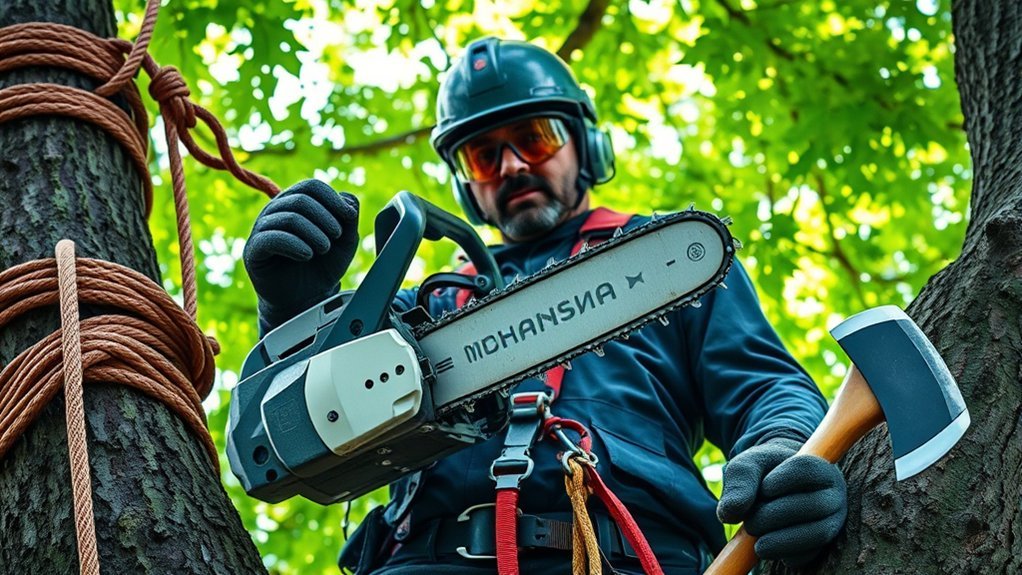
When you work as a tree surgeon, having the right tools makes all the difference. You’ll rely on chainsaws, pruning shears, and safety gear like helmets and harnesses to get the job done safely and efficiently.
Let’s explore the essential equipment you’ll need for both precision work and protection. It’s all about being prepared and staying safe while you work.
Common Tree Surgeon Tools
Because working at heights and handling heavy wood requires precision and safety, tree surgeons rely on a specific set of tools designed for their demanding tasks. When you’re doing tree work, chainsaws are essential for cutting branches and felling trees accurately.
You’ll also use polesaws and pole pruners to reach high branches without scaffolding or ladders. Ropes, harnesses, and climbing gear help you access tricky spots safely.
For stump removal, stump grinders efficiently break down stumps into wood chips. Additionally, axes, rigging kits, and hydraulic lifts assist you in safely dismantling large or complex trees.
These tools allow tree surgeons like you to work effectively and maintain safety throughout every stage of tree care. It’s all about having the right gear to get the job done well and stay safe while doing it.
Safety Equipment Essentials
Although tree surgeons are skilled at handling tools and climbing, you can’t overlook the importance of safety equipment to protect yourself on the job. Tree surgeons face risks from falling debris, loud noise, and working at heights, so the right gear is essential.
Here are three critical safety equipment items you should always use:
- Protective gear: Helmets, eye protection, hearing protection, and chainsaw chaps shield you from injuries and noise hazards.
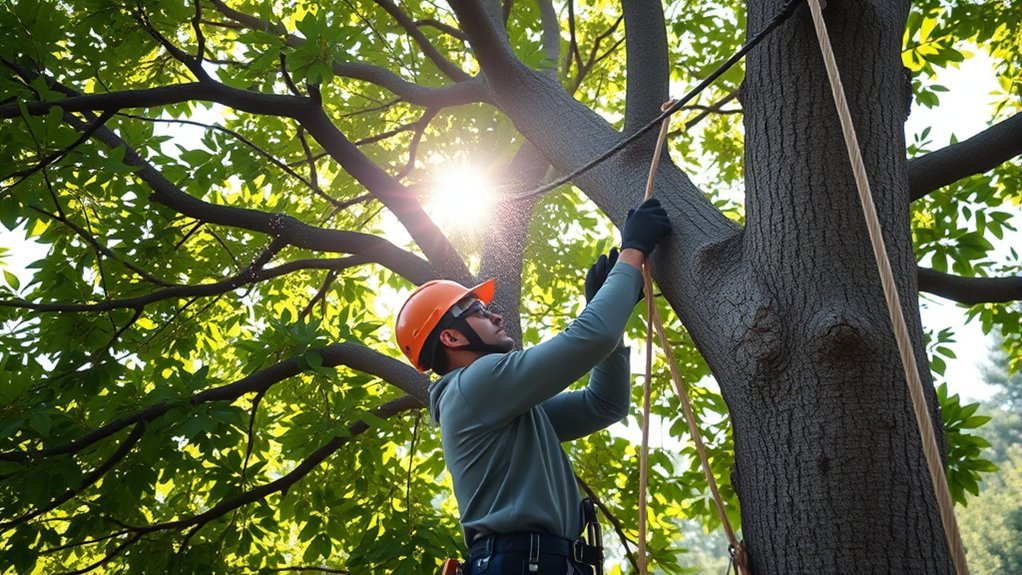
- Climbing equipment: Harnesses, ropes, and lanyards keep you secure while maneuvering through trees safely.
- Visibility and warning tools: High-visibility clothing and warning signs ensure you’re seen, especially near traffic or public areas.
Using this safety equipment helps you work confidently and reduces the chance of accidents during tree surgery tasks. So, make sure you never skip these basics!
Pruning and Trimming Techniques for Tree Surgeons
Mastering pruning and trimming techniques is crucial if you want to keep trees healthy and structurally sound. When pruning, you’ll carefully remove dead, diseased, or crossing branches to encourage strong growth and maintain the tree’s structure.
Proper trimming means understanding how the tree grows, so you don’t damage the canopy or stress the tree. Techniques like crown thinning, raising, and reduction help improve light penetration and airflow, which boosts overall health.
Timing is key; pruning during the dormant season minimizes stress and lowers disease risk. You’ll rely on specialized tools—hand saws, pruning shears, and pole pruners—to make clean cuts that heal quickly.
Safe Tree Removal: Methods and Best Practices
When you’re removing a tree, using careful dismantling techniques is key to keeping everyone safe and protecting nearby structures. You’ll need to follow strict safety protocols and industry standards to manage risks effectively.
Let’s explore how these best practices help you handle tree removal with precision and care. It’s all about being methodical and cautious every step of the way.
Tree Dismantling Techniques
Before starting a tree dismantling job, you need to carefully assess the tree’s structure, weight distribution, and potential fall zones to guarantee safety.
Tree dismantling is a precise form of tree removal that involves lowering sections carefully to avoid damage.
Here are three common tree dismantling techniques you’ll encounter:
- Sectional Dismantling – Cutting the tree into manageable parts and lowering them with ropes or cranes.
- Cabling and Rigging – Using cables to support and guide heavy branches during removal.
- Specialized Equipment – Employing harnesses, cranes, and ropes to control each segment’s fall.
Mastering these methods ensures you remove large or hazardous trees efficiently and safely. It also helps protect both property and people.
Safety Protocols and Standards
Handling tree dismantling methods like sectional cutting and cabling means you need to keep safety at the forefront. Following established safety standards, such as those from ANSI, helps minimize risks to you and property during removal.
Before starting, you must assess the tree’s structure and any nearby hazards to plan your work carefully. Using specialized rigging systems, cranes, and harnesses allows you to control how branches and trunks fall, preventing accidents.
Wearing personal protective equipment—helmets, gloves, and high-visibility clothing—is mandatory to protect yourself throughout the process. By strictly adhering to these protocols and standards, you guarantee a safer environment for everyone involved.
This approach makes complex or confined tree removals manageable and efficient without compromising safety. It’s all about working smart and staying safe.
Managing Dangerous Tree Work Situations
Since dangerous tree work involves significant risks to people and property, you need to start with a thorough risk assessment. Identifying hazardous trees early helps decide if removal or support methods like cabling and bracing are necessary.
Here are three key steps you’ll rely on:
- Conduct detailed risk assessments to spot hazards affecting people, property, and nearby trees.
- Use specialized techniques such as rigging and bracing to safely manage unstable trees in challenging locations.
- Follow strict safety protocols and wear protective gear to minimize risks during removal or maintenance.
You’ll also use equipment like harnesses and cranes, ensuring all work aligns with industry standards, including ANSI guidelines.
Managing dangerous tree work demands precision and caution, but with the right preparation and techniques, you can keep everyone safe while handling even the most hazardous trees efficiently.
Post-Storm Cleanup and Hazard Management by Tree Surgeons
When storms strike, tree surgeons jump into action to clear fallen branches and debris that could cause further damage or hazards. Their storm cleanup efforts focus on quickly removing dangerous materials to protect your property and guarantee safety.
Beyond clearing debris, they assess damaged trees for stability. This helps reduce the risk of collapse during future high winds.
If a tree is broken or unstable in a hazardous spot, they perform emergency dismantling to prevent accidents. Hazard management also involves pruning dead or hanging limbs that might fall unexpectedly, keeping your surroundings safe.
To do all this effectively, tree surgeons use specialized equipment designed to remove storm-damaged trees or parts safely and efficiently. By handling post-storm cleanup and hazard management professionally, they help restore order and minimize risks caused by severe weather.
That way, you get peace of mind after the chaos subsides.
Techniques Tree Surgeons Use to Enhance Tree Stability and Promote Growth
Although storm cleanup is essential, tree surgeons also use various techniques to enhance tree stability and promote healthy growth over time. You’ll find that their work goes beyond just removing damaged limbs—they actively support and nurture your trees.
Here are three key methods they use:
- Cabling and bracing: This technique stabilizes weak or split branches by installing flexible supports. It helps reduce the risk of breakage during strong winds.
- Pruning: Strategic pruning removes diseased or competing branches. This encourages healthier growth and improves the tree’s overall structure.
- Crown thinning and reduction: By reducing wind resistance through selective branch removal, tree surgeons help prevent storm damage. They also promote balanced growth.
Additionally, they may improve root health with soil aeration and fertilization. This ensures your tree remains vigorous from the ground up.
These combined efforts keep your trees safe, stable, and thriving for years to come.
Training and Certification Required to Become a Tree Surgeon
Mastering techniques like pruning, cabling, and crown reduction takes more than just skill—it requires proper training and certification. To become a tree surgeon, you’ll typically complete formal qualifications such as NVQs, BTECs, or degrees in forestry or arboriculture to build foundational knowledge.
Practical experience through apprenticeships or on-the-job training is vital for developing skills like tree climbing and safe equipment use. Many professionals also pursue specialized training in chainsaw operation, aerial lifts, and rigging techniques.
Becoming one of the certified arborists often involves passing certification exams from organizations like the International Society of Arboriculture (ISA). This guarantees you meet industry standards and shows you know your stuff.
Training and certification don’t stop once you’re qualified. Continuing education and certification renewal keep you updated on evolving safety regulations and best practices.
This ongoing commitment helps you maintain the expertise needed to care for trees effectively and safely. It’s all about staying sharp and doing the job right every time.
Why Hiring a Licensed Tree Surgeon Matters for Safety and Health
Because tree work involves significant risks, hiring a licensed tree surgeon is essential for your safety and property protection. A licensed tree surgeon has the training and certification to handle tree care safely.
This means both you and your property stay secure during maintenance.
Here’s why you should always choose a licensed professional:
- They follow strict safety regulations, reducing accidents and damage risks.
- Their expertise in tree health prevents improper pruning or removal that could harm your trees.
- They understand local laws, helping you avoid liability issues if injuries or damage occur.
Frequently Asked Questions
Do Tree Surgeons Need a Degree?
You don’t need a degree to become a tree surgeon. Most training comes from apprenticeships, NVQs, or specialized courses rather than university.
While formal education in forestry can help, it’s not required for entry-level work. Instead, gaining practical experience and earning certifications from organizations like the ISA or Arboricultural Association matters more.
You can start on the job and build your skills. Then, you can pursue further qualifications to advance your career.
What Are the Key Differences Between a Tree Surgeon and an Arborist?
The key differences between a tree surgeon and an arborist lie in their roles. You’ll find that arborists focus on diagnosing tree health issues and recommending treatments, while tree surgeons handle the physical work like trimming, pruning, or removing trees.
Fundamentally, arborists plan and assess, and tree surgeons execute the maintenance and removal. They work closely together, but your job as a tree surgeon is more hands-on compared to the arborist’s advisory role.
What’s the Proper Name for a Tree Surgeon?
The proper name for a tree surgeon is an “arborist.” If you want to sound more precise, especially in professional settings, you’d use “certified arborist” to emphasize their training and expertise.
Arborists focus on tree biology, health, and maintenance. Many earn certification through the International Society of Arboriculture (ISA).
How Long Does It Take to Be an Arborist?
Becoming an arborist takes about 3 to 5 years, but don’t expect it to be just a straightforward path.
While some spend 2 to 4 years studying arboriculture, others gain hands-on experience as tree laborers or apprentices.
You’ll also need certifications, which demand ongoing education. So, although it might seem like a quick process, becoming fully qualified blends formal learning with practical experience over time.
Conclusion
If you think a tree surgeon just chops down trees, think again—you’re missing out on a superhero of the plant world! These pros don’t just prune; they perform tree miracles, battling storms and saving your yard’s greenery like it’s a life-or-death mission.
Without their expert care, your trees could be one gust away from disaster. So, trust a licensed tree surgeon—you’re basically hiring a tree whisperer with a cape!