What Is Tree Pruning and How Do You Do It?
Tree pruning is when you selectively remove branches to keep your tree healthy, safe, and looking good. You’ll want to prune during the dormant season, usually late winter or early spring, to help your tree heal quickly.
Focus on cutting dead, diseased, or crossing branches, making clean cuts just outside the branch collar. Avoid heavy pruning or topping, and use sharp tools for the best results.
Keep going to discover how proper pruning can boost your tree’s health and growth. It’s easier than you might think once you get the hang of it!
Key Takeaways
- Tree pruning is the selective removal of branches to improve the health, safety, and appearance of trees.
- It’s best to prune during dormancy, usually late winter to early spring. This timing helps reduce stress and promotes healing.
- You’ll want to remove dead, diseased, damaged, or crossing branches. Doing this prevents decay and improves the tree’s structure.
- When cutting, make sure your cuts are just outside the branch collar. Use sharp tools to help the wounds close quickly.
- Be careful not to over-prune or prune at the wrong time. Otherwise, you might cause damage, stress, or weak growth.
What Tree Pruning Is and Why It Matters
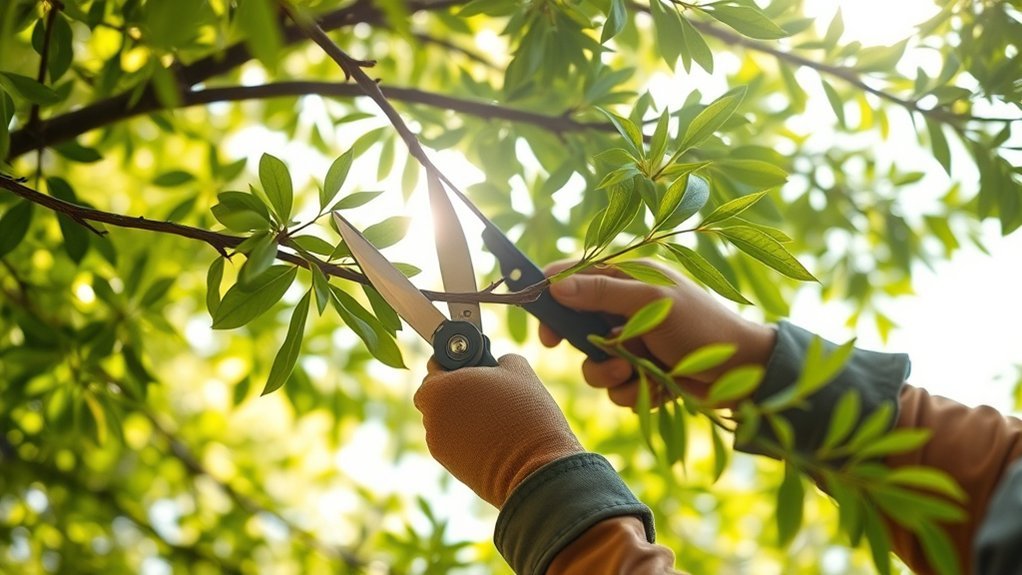
Although it might seem simple, tree pruning is a careful process of selectively removing branches to keep your tree healthy, safe, and looking its best. When you practice proper pruning, you focus on cutting away dead branches, diseased limbs, or damaged parts that can weaken your tree or invite pests and decay.
This not only improves the tree’s overall crucial but also promotes a strong structure, encouraging healthy growth and reducing the risk of falling branches. You’ll find that pruning serves different purposes, from natural pruning that helps the tree maintain its shape to structural pruning aimed at guiding growth.
It’s important to approach pruning thoughtfully because improper pruning can cause weak growth or long-term damage. By understanding what pruning is and why it matters, you’re taking the first step toward keeping your trees thriving, safe, and visually appealing for years to come.
When Is the Best Time to Prune Your Trees?
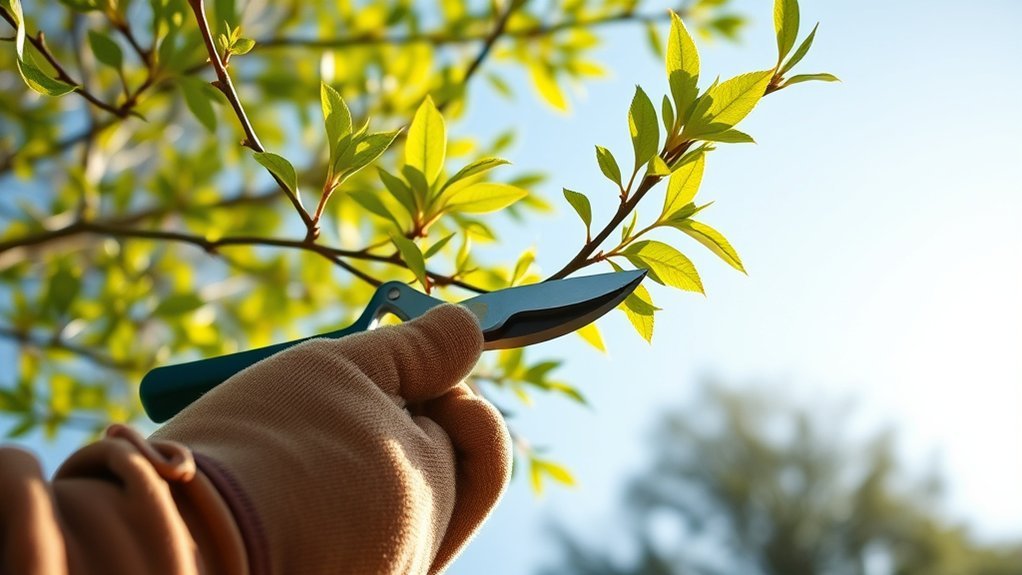
You’ll get the best results pruning most trees during their dormant season, usually late winter to early spring. It’s important to avoid stressful conditions like extreme heat or drought when trimming branches.
Also, keep in mind that the ideal timing can vary depending on the species you’re working with. So, it’s always a good idea to check what works best for the specific type of tree you have.
Dormant Season Benefits
When’s the best time to trim your trees? Dormant trimming, usually done in late winter or early spring, is ideal. During this time, your tree’s structure is easy to see, so you can effectively remove dead branches and any damaged or diseased limbs.
Pruning while the tree is dormant promotes healthy growth by reducing stress and allowing wounds to heal before the growing season begins. Plus, pruning before budbreak lowers the risk of pest infestations and disease since many pests are less active then.
For oak trees, winter is especially important to avoid spreading oak wilt. Choosing dormant trimming helps ensure your trees stay strong and vibrant without the added risks that come with pruning during active growth or extreme weather conditions.
Avoiding Stressful Conditions
Since pruning during stressful conditions can harm your trees, it’s best to avoid extreme heat, drought, or active growth periods. Choosing the right pruning time reduces stress and supports healthy recovery.
The ideal window is the dormant period, usually late winter or early spring before buds break. Here’s what to keep in mind:
- Prune during dormancy to minimize stress and promote healing
- Avoid pruning in extreme heat or drought to prevent damage
- Skip pruning during active growth to avoid weak regrowth and disease
- Schedule pruning after flowering for trees that bloom in spring
- For sensitive species like oaks, winter pruning reduces disease risk
Species-Specific Timing
Knowing the right time to prune depends largely on the type of tree you have. Species-specific timing is essential to protect your tree’s health and encourage growth.
Most trees respond best to pruning during their dormant period, usually late winter to early spring, before budbreak starts. However, if you’re dealing with flowering trees, timing shifts a bit.
Spring-flowering trees should be pruned right after their blooms fade to avoid cutting off next year’s buds. For trees that bloom in mid- to late summer, summer pruning works well to shape or remove damaged branches without affecting flowers.
If you have oak trees, prune them in winter but avoid April 15 to October 15 to prevent disease spread. Also, try to steer clear of fall pruning since wounds heal slowly and fungi spread more easily.
How to Identify Which Branches Need Tree Pruning
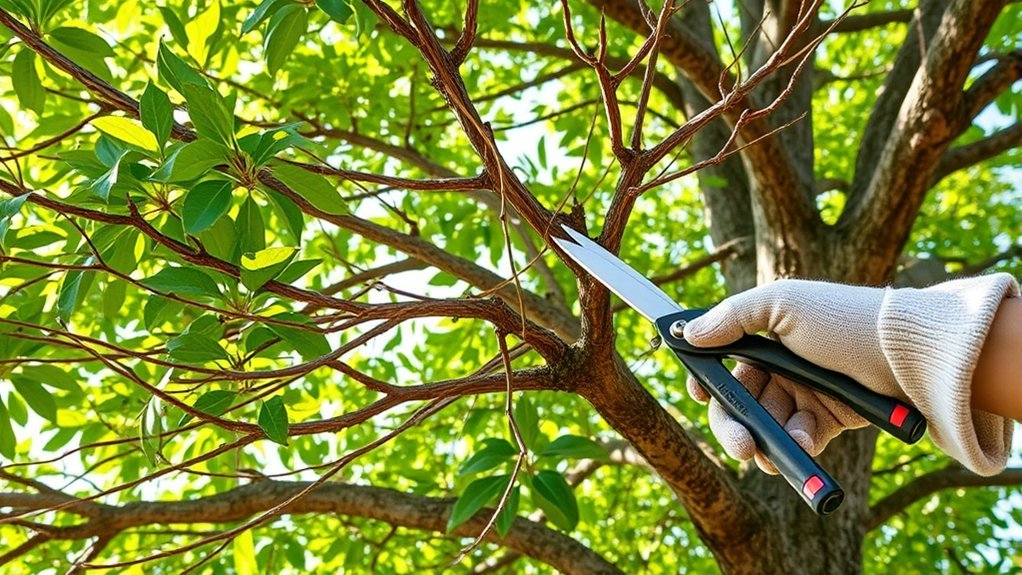
How can you tell which branches need pruning to keep your tree healthy and strong? Start by looking for dead branches, as pruning these helps prevent decay from spreading.
You’ll also want to remove branches that are diseased or damaged to protect the overall tree health. Check for branches that rub or cross, since these can create wounds and weaken the tree’s structure.
Focus on branches less than one-third the size of their parent branch to ensure proper cuts and healing. Additionally, look out for watersprouts or weak, thin shoots growing aggressively—they can compromise the tree’s strength.
Finally, prioritize removing branches that are deranged or improperly attached to avoid future issues.
- Dead, diseased, or damaged branches
- Branches rubbing or crossing
- Branches smaller than one-third the parent branch
- Watersprouts and weak shoots
- Deranged or improperly attached branches
Identifying these will guide your pruning efforts effectively.
How to Make Proper Pruning Cuts
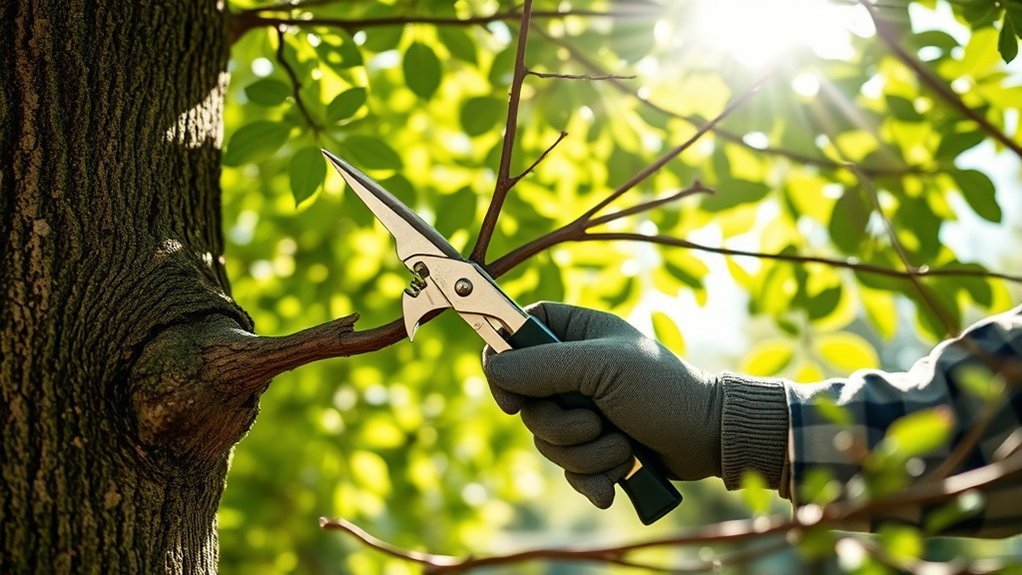
When you make pruning cuts, it’s super important to position them just outside the branch collar. This helps your tree heal properly and avoids decay. The branch collar has special cells that promote quick wound closure, so don’t cut into it.
Instead, try to make your cut halfway between the branch collar’s bulge and the branch diameter. This way, you minimize the wound surface and help the tree recover faster.
For bigger branches, use the three-cut method. First, make an undercut about a foot from the trunk to stop the bark from tearing. Then, cut from the top, a little further out, to remove the limb.
Finally, make the pruning cut just outside the branch collar to get rid of the stub cleanly. For smaller branches, bypass pruners are great because they make precise cuts without crushing the wood.
Common Tree Pruning Techniques and When to Use Them
You’ll find several common pruning techniques, each suited for different tree types and goals. Knowing when to apply these methods is just as important as understanding the styles themselves.
Let’s explore how timing and technique work together to keep your trees healthy and well-shaped. It’s all about giving your trees the right care at the right time.
Pruning Styles Overview
Although pruning styles vary widely, selecting the right technique is key to maintaining your tree’s health and appearance. Natural pruning encourages the tree’s inherent shape by removing stress areas, while avoiding harmful methods like topping.
Ornamental pruning focuses on aesthetics, with styles such as topiary and espalier requiring precise shaping and upkeep. Pollarding controls growth by cutting back young trees annually, helping you manage size and form.
To guarantee proper healing, always cut just outside the branch collar.
Here are common pruning styles to contemplate:
- Natural pruning for health and shape
- Ornamental pruning for decorative appeal
- Pollarding for growth control
- Avoid topping to prevent damage
- Proper cuts to promote healing
Choosing the right style keeps your tree thriving and beautiful.
Timing For Techniques
Selecting the right pruning style is just one part of keeping your tree healthy—knowing the best time to prune is equally important. Timing your pruning during the tree’s dormant season or just before budbreak helps ensure ideal healing and growth.
You’ll want to avoid pruning during extreme heat to prevent sunburn and cellular damage. For summer- and fruit-bearing trees, prune in winter or early spring to encourage healthy flowering and fruiting.
If your tree blooms in spring, prune right after the flowers fade; for mid- to late-summer bloomers, winter or early spring is best. Steer clear of pruning in fall since this can increase disease risk and slow wound healing.
Pruning Techniques for Young vs. Mature Trees
When you care for young trees, pruning during their first five years is essential to build a strong, balanced structure by removing competing leaders and weak branches. Pruning techniques for young trees focus on shaping and guiding growth.
Mature trees, though, require a different approach to maintain health and safety. For mature trees, you’ll want to concentrate on removing dead, diseased, or damaged branches without over-pruning. Too many cuts can cause stress or decay.
Keep these key points in mind for pruning young vs. mature trees:
- Young trees need selective cuts to develop a stable framework.
- Remove competing leaders and poorly attached branches in young trees.
- Mature trees require maintenance pruning to preserve health.
- Avoid excessive cuts on mature trees to reduce stress.
- Aim to maintain the aesthetic form and safety of mature trees.
Understanding these differences helps you apply the right pruning techniques at every stage. It’s all about giving your trees what they need to thrive, whether they’re just starting out or well-established.
Essential Tools for Clean and Safe Tree Pruning
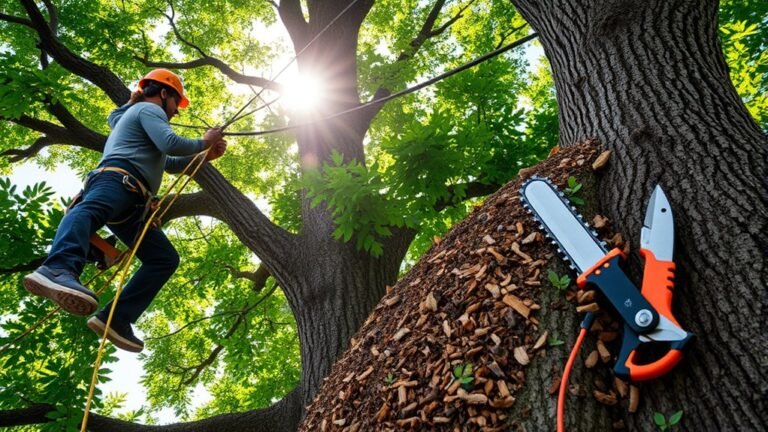
To prune trees cleanly and safely, you’ll need the right tools for each job, from sharp bypass shears to long-handled saws for hard-to-reach branches. Keeping your blades sharp is key to making smooth cuts that help your tree heal faster.
And don’t forget to wear proper safety gear to protect yourself during every pruning task. It’s all about working smart and staying safe!
Tool Types and Uses
Although proper technique is essential, having the right tools makes clean and safe tree pruning much easier. When you prune a tree, using the appropriate pruning tools helps you make precise cuts that promote healthy growth and reduce damage.
Here are key tools and their uses:
- Bypass pruning shears for small branches up to ¾ inch thick
- Pruning saw (about 6 inches) for medium limbs up to 4 inches
- Long-handled pruning shears or pole pruners to reach high branches safely
- Larger saws like a 13-inch arborist saw or reciprocating saw for thick branches over 4 inches
- Clean, sharp blades on all tools make pruning smoother and minimize tissue damage
Choosing the right tools makes your pruning work safer, more efficient, and better for the tree’s health. It really pays off to pick the right gear before you start!
Importance of Sharp Blades
Because sharp blades make clean cuts, they play an essential role in helping your tree heal faster and stay healthy. When you use dull pruning tools, they crush or tear branches, causing unnecessary tissue damage and making your tree more vulnerable to disease.
Keeping your pruning tools sharp ensures precise cuts, which reduce stress on the tree and promote quicker recovery. Sharp blades also help prevent the spread of pathogens between trees by making cleaner cuts that limit infection points.
Plus, well-maintained blades require less effort from you during pruning, making the job easier and safer overall. Regularly sharpening your pruning tools is a simple step that considerably benefits both your tree’s health and your pruning experience.
Safety Equipment Essentials
How can you keep yourself safe while making clean cuts during tree pruning? Using the right safety equipment is vital. You’ll want to wear protective gear to shield yourself from accidents and guarantee precision.
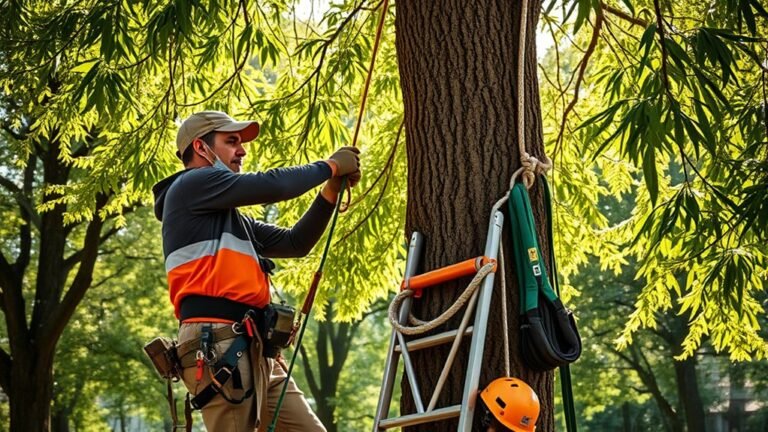
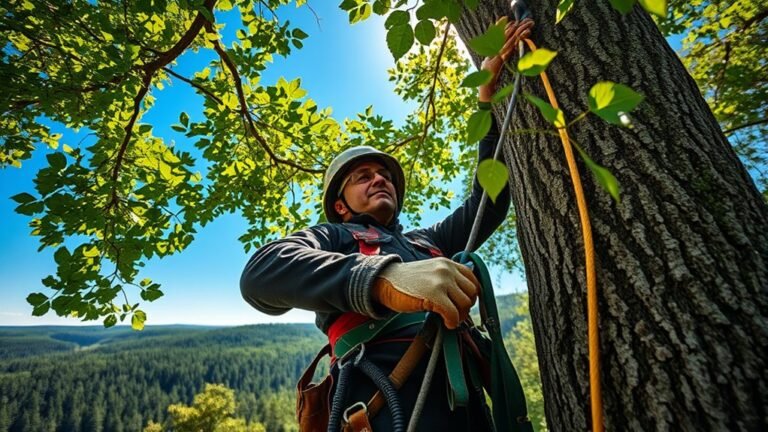
Here’s what you need: thick gloves and long sleeves to protect against sharp blades and flying debris. Safety glasses are a must to guard your eyes. And definitely wear a helmet or hard hat when working with overhead limbs.
For the tools, bypass pruning shears work great for small branches (up to ¾ inch) to make clean cuts. For medium branches (up to 4 inches), use a pruning saw or loppers with sharp blades for smooth cuts.
Keeping your tools sharp and using the proper protective gear helps prevent injury and promotes healthy tree healing. Don’t skip these essentials!
Common Tree Pruning Mistakes That Harm Tree Health
When you prune a tree incorrectly, you can unintentionally harm its health and structure. One common mistake is pruning branches too heavily, especially during the growing season. This stresses the tree and encourages weak water sprout growth.
Using improper techniques, like making cuts too close to the trunk or branch collar, prevents proper healing and opens doors for pests and diseases. Another error is topping or cutting back a large portion of the canopy, which disrupts the tree’s natural shape and increases decay risk.
You should also avoid pruning at the wrong time of year, such as during active growth or in fall. This can slow wound closure and raise susceptibility to disease. Finally, dull tools create jagged cuts that heal poorly, compromising tree health.
Being mindful of these mistakes ensures your pruning supports the tree’s well-being instead of causing harm. It’s all about helping your tree stay strong and healthy!
How Tree Pruning Improves Health and Growth
While it may seem simple, proper tree pruning plays a crucial role in keeping your tree healthy and encouraging strong growth. By removing dead, diseased, or damaged branches, you prevent pests and diseases from spreading, which keeps your tree healthier overall.
Pruning also helps stimulate new growth, improving your tree’s vitality and appearance. Here are five ways pruning benefits your tree’s health and growth:
- Removes dead or weak branches to reduce risk of breakage
- Promotes better airflow and light penetration within the canopy
- Encourages strong, healthy growth by focusing energy on essential limbs
- Stimulates flowering and new shoots for a more vibrant tree
- Supports faster healing by pruning at the right time, reducing stress
When to Call a Pro for Tree Pruning Help
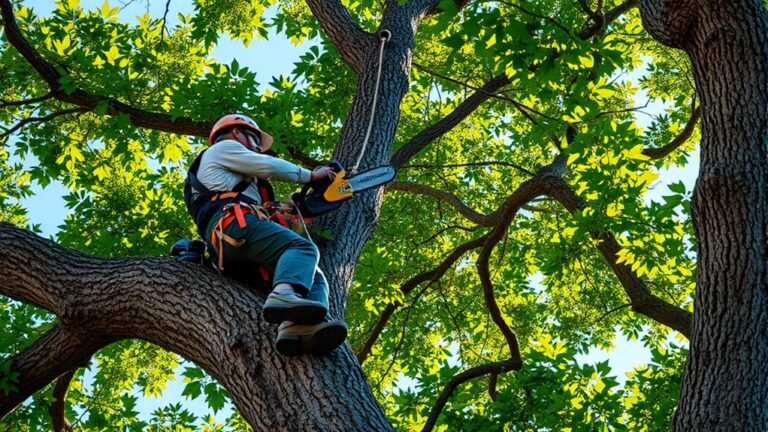
If your tree has large, heavy limbs or is close to power lines or structures, it’s best to call a professional arborist. Handling these situations requires specialized equipment and expertise to prune safely without risking injury or property damage.
You should also seek professional help if your tree is damaged, diseased, or structurally compromised. These conditions need careful assessment and precise pruning techniques to avoid making things worse.
Attempting complex or large-scale pruning yourself can lead to mistakes that harm the tree or create hazards. After storms or severe weather, emergency pruning by a certified arborist is vital to remove dangerous branches and prevent further damage.
Frequently Asked Questions
What Months Should You Not Prune Trees?
You shouldn’t prune trees during fall because wounds heal slowly, and decay fungi are more active, increasing disease risk. Avoid pruning oak trees in spring and summer since they’re prone to certain diseases then.
It’s best to wait until winter or early spring when trees are dormant, and pests are less active. This timing helps your trees heal better and stay healthier overall.
Always sterilize your tools to prevent spreading infections. It’s a simple step that makes a big difference!
What Is the 1-2-3 Rule for Pruning Trees?
Did you know that following the 1-2-3 rule can cut your tree’s risk of decay by over 50%?
You’ll want to cut a branch back to about one-third the size of the one you’re removing. Make your reduction cut halfway between the branch’s bulge and diameter, right outside the branch collar.
This method helps your tree heal faster and keeps it healthy and strong. It’s a simple step that makes a big difference!
Is There a Difference Between Tree Trimming and Tree Pruning?
Yes, there is a difference between tree trimming and pruning. Trimming is mostly about shaping your tree and keeping it looking neat.
Pruning is focused on removing dead or unhealthy branches to improve the tree’s health and safety. You’ll want to prune carefully to avoid damage, since it requires more know-how.
Trimming is often simpler and done for cosmetic reasons. Both have their place, but they serve different purposes.
What Are the Common Mistakes to Avoid When Pruning a Tree?
You might think cutting branches anywhere is fine, but avoid making cuts flush against the trunk or branch collar—that hinders healing. Don’t over-prune, or you’ll encourage weak watersprouts.
Resist topping trees; it causes long-term damage. Never prune during active growth or extreme heat, or you’ll stress your tree.
Ultimately, don’t use dull blades or improper tools—they cause jagged cuts that invite infections. Careful pruning keeps your tree healthy and thriving.
Conclusion
Think of tree pruning like giving your tree a fresh haircut—it helps it look its best and stay healthy. By knowing when and how to prune, you’re not just trimming branches; you’re nurturing growth and preventing problems before they start.
Remember, with the right tools and techniques, you can help your tree thrive for years to come. And if things get tricky, don’t hesitate to call in a pro to keep your tree’s beauty intact.