
What Is the Difference Between Tree Trimming and Pruning?
Tree trimming and pruning serve different purposes for your trees. Trimming mainly shapes and controls size, keeping your landscape neat and attractive.
Pruning focuses on tree health—removing dead or diseased branches to boost growth, safety, and longevity.
Timing, tools, and techniques also differ, with pruning needing more careful planning.
Knowing these distinctions helps you care for your trees properly. Keep exploring to discover how to best maintain your trees’ health and beauty.
Key Takeaways
- Tree trimming focuses on shaping and controlling tree size primarily for aesthetic purposes. It’s all about keeping things looking neat and tidy.
- Tree pruning removes dead, diseased, or unsafe branches to improve tree health and structure. This helps the tree grow stronger and stay safe.
- Trimming is performed regularly to maintain neatness, while pruning is timed seasonally based on tree type. So, trimming is more about routine maintenance.
- Proper pruning supports natural growth and disease prevention; improper trimming or pruning can actually weaken trees. It’s important to do it the right way.
- Professional pruning enhances tree longevity and safety, whereas trimming usually addresses cosmetic needs. So, if you want your tree to thrive, pruning by an expert is the way to go.
What Is Tree Trimming and Why Is It Done

What exactly is tree trimming, and why might you want to do it? Tree trimming focuses on maintaining the aesthetic appearance of your trees and shrubs by controlling overgrowth and enhancing their visual appeal.
You typically schedule tree trimming at least twice a year to keep branches in check and promote a neat, uniform look. This process involves making broad cuts aimed at reducing size and shaping the tree for better curb appeal rather than improving its health.
By trimming, you prevent excessive growth that might interfere with structures or power lines, ensuring safety alongside beauty. When you invest in regular scheduled maintenance, your landscape stays tidy and attractive, which can boost the overall value of your property.
What Is Tree Pruning and What Are Its Benefits

How can pruning transform the health and longevity of your trees? Tree pruning is the strategic removal of dead, diseased branches and those that compromise structure, done with proper cuts by a certified arborist.
This process boosts tree health and encourages healthy growth by redirecting energy to stronger limbs. It’s like giving your tree a fresh start.
Consider these benefits of pruning:
- Removes diseased branches, preventing spread and decay.
- Improves airflow and light penetration, reducing disease risk.
- Promotes balanced, vigorous growth by focusing resources.
- Performed during the dormant season, it minimizes stress and speeds healing.
Pretty cool, right? Pruning really helps your trees thrive and stay strong for years to come.
Trimming vs. Pruning: What’s the Difference?

Wondering whether you need tree trimming or pruning? Both play crucial roles in tree care, but they serve different purposes.
Tree trimming primarily shapes your tree, controls size, and enhances its appearance. Pruning, on the other hand, focuses on removing dead, diseased, or unsafe branches to promote tree health and prevent structural problems.
Using proper techniques is critical in both to avoid stressing your tree or causing damage.
| Aspect | Tree Trimming |
|---|---|
| Purpose | Aesthetic shaping |
| Frequency | More frequent |
| Focus | Branches for size control |
| Impact on Tree Health | Cosmetic, less critical |
| Aspect | Pruning |
| Purpose | Promote tree health |
| Frequency | Seasonal |
| Focus | Dead/diseased branches |
| Impact on Tree Health | Essential for vitality |
Choosing the right approach ensures your trees stay healthy and beautiful. So, it’s worth knowing which one your trees need!
Essential Tools and Techniques for Trimming and Pruning
To get the best results, you’ll need the right tools—hedge trimmers and small shears for trimming, and pruning saws or loppers for bigger cuts.
Knowing proper pruning techniques, like making angled cuts just outside the branch collar, helps your trees heal faster and stay healthy.
Always use sharp, clean tools to guarantee safety and precision while working. It really makes a difference!
Trimming Tools Overview
Although selecting the right tools might seem straightforward, using hand pruners, loppers, hedge shears, and pruning saws correctly can make a big difference in your trimming results. These pruning tools each serve unique roles depending on branch size and task.
To get the best from your tools, keep these essentials in mind:
- Use hand pruners for small branches and detailed cuts.
- Reach thicker limbs with loppers to save effort.
- Employ pruning saws for larger branches requiring clean, precise cuts.
- Maintain sharp tools through regular cleaning and sharpening to reduce plant stress and prevent disease.
Mastering proper cutting technique and consistent tool maintenance guarantees your trimming work promotes healthy growth and longevity.
It’s really about working smarter, not harder, when it comes to trimming. Just a bit of care goes a long way!
Pruning Techniques Explained
How do you guarantee your pruning encourages healthy growth and keeps your trees safe? It starts with using the right pruning tools—sharp, clean pruning shears, loppers, and saws—to make proper cuts.
You’ll want to focus on pruning techniques like thinning cuts, which remove crowded branches, reduction cuts to shorten limbs, and heading cuts that stimulate growth.
When removing large branches, the three-cut method is key: first, cut beneath the branch, then a second cut farther out to prevent bark tearing, and finally, a clean cut just outside the branch collar.
Making proper cuts just beyond the branch collar helps the tree heal naturally and avoids decay. Using these techniques minimizes stress and infection, ensuring your pruning is both effective and safe.
Safety and Precision
When you’re trimming or pruning, using the right tools and safety gear is essential for both your protection and the tree’s health. To ensure safety and precision, follow these key steps:
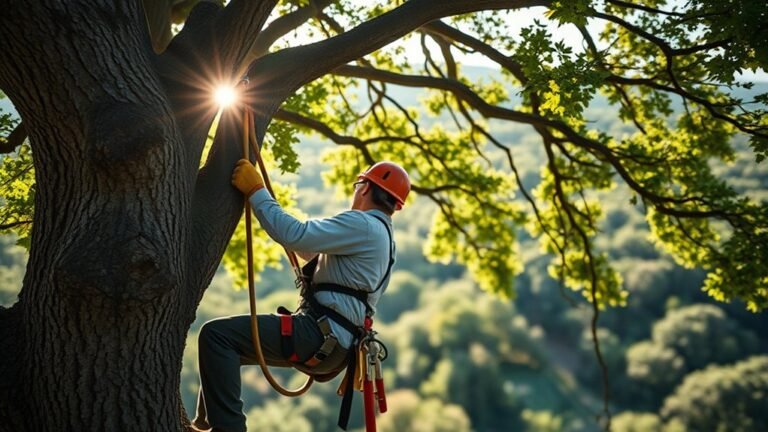
Always wear safety equipment like helmets, gloves, and harnesses to protect yourself from hazards. It might seem like a hassle, but trust me, it’s worth it.
Use specialized tools such as sharp shears, pruning saws, and loppers to make clean, correct cuts. Dull tools can cause more damage than good, so keep them sharp!
Apply proper pruning techniques, like the three-cut method, to minimize bark tearing and promote quick healing. This method really helps the tree recover faster.
Make cuts just outside the branch collar at the right angles to support tree health and reduce stress. It’s all about helping the tree stay strong and healthy.
When to Trim vs. Prune Your Trees
Knowing when to trim or prune your trees depends a lot on the season and the type of tree you have. Trimming is usually done a couple of times a year to keep things looking neat.
Pruning, on the other hand, is best done during dormancy to support tree health. Understanding these timing guidelines will help you care for your trees properly without causing harm.
Seasonal Timing Guidelines
Although both trimming and pruning involve cutting back parts of your trees, the best time to do each depends on the season and your goals. Understanding seasonal timing helps protect tree health and promotes proper healing.
Here’s when to act:
- Prune during the dormant period—late fall to early spring—to reduce stress and encourage strong regrowth. This is when your tree is less active, so it can heal better.
- Avoid heavy pruning in active growth; it can cause weak, excessive shoots. You don’t want to stress your tree when it’s busy growing.
- Trim in late spring or summer to maintain shape and remove overgrowth. This keeps your trees looking neat without harming them.
- For flowering trees, schedule spring pruning right after they bloom to preserve next year’s buds. That way, you won’t lose any beautiful blossoms.
Following these seasonal timing guidelines ensures your trees stay healthy and vibrant year-round. It’s all about working with your trees, not against them!
Tree Type Considerations
How do you decide whether to trim or prune your trees? It largely depends on the tree species and its growth cycle.
For deciduous trees like maples and oaks, pruning during dormancy promotes healthy growth. Flowering trees, such as dogwoods, should be pruned right after blooming to protect next year’s buds.
Evergreens need pruning in late winter to maintain shape without disrupting growth. Fruit trees benefit from winter pruning to boost fruit production.
Young trees require early pruning to develop strong frameworks, while mature trees need species-specific care.
| Tree Type | Best Time to Prune | Purpose |
|---|---|---|
| Deciduous Trees | Late winter/early spring | Healthy growth |
| Flowering Trees | After blooming | Preserve flowers |
| Evergreen Trees | Late winter/early spring | Maintain shape |
Risks of Incorrect Pruning and How to Avoid Them
When you prune a tree incorrectly, you risk creating open wounds that invite diseases and pests. This can really weaken the tree’s health.
Incorrect pruning not only increases disease risk but also stresses your tree. That stress might lead to long-term damage, which nobody wants.
To protect your tree, follow these essential steps:
- Use proper techniques to make clean cuts. Avoid tearing because that slows down healing.
- Keep your tools safe by making sure blades are sharp. Dull blades cause unnecessary damage.
- Think about the specific needs of your tree species. Timing and methods can vary quite a bit.
- Don’t over-prune. It’s important to preserve the tree’s structure and support its natural growth.
Fort Worth Trees That Benefit From Proper Trimming and Pruning
If you have Live Oaks or Crape Myrtles in Fort Worth, proper trimming and pruning are key to keeping them healthy and attractive. Timing matters, so knowing when to prune—like winter for deciduous trees or right after flowering for ornamentals—makes all the difference.
Let’s explore how these seasonal tips can help your trees thrive.
Live Oak Care
Why does proper care matter so much for Live Oaks in Fort Worth? These majestic trees really thrive when pruning and trimming follow proper techniques, especially during dormancy in winter. This timing helps reduce stress and keeps the tree healthy.
Certified arborists often point out that improper cuts—like topping or over-pruning—can actually weaken your live oak and invite pests or decay. So, it’s important to be careful with how you trim.
To keep your live oak strong and beautiful, consider these tips:
- Prune selectively during dormancy to support the tree’s structure.
- Avoid removing too many branches at once since that stresses the tree.
- Shape the canopy carefully to keep it looking great without causing damage.
- And definitely consult arborists who know the local conditions and best practices.
Taking proper care of your live oak helps ensure these iconic Fort Worth trees stay vibrant for generations to come.
Crape Myrtle Maintenance
Although Crape Myrtles are relatively low-maintenance, proper trimming and pruning are essential to keep them blooming vibrantly and looking their best in Fort Worth. Annual crape myrtle maintenance through tree trimming and tree pruning encourages healthy growth and prevents limb crossing, which can cause damage.
Pruning in late winter or early spring removes dead or diseased branches, ensuring your tree develops strong for the season ahead. It’s important to avoid excessive pruning like topping, which harms the tree’s natural form and leads to weak regrowth.
Making proper cuts is vital to prevent pest infestations and structural issues. To protect your Crape Myrtles, consider hiring a professional tree service that understands the right techniques for maintaining these beautiful trees effectively and safely.
Seasonal Pruning Tips
When you prune trees at the right time, you help them stay healthy and grow strong. Seasonal pruning is key to maintaining tree health and encouraging growth.
Here are four important pruning tips for Fort Worth trees:
- Prune deciduous trees in winter when they’re dormant to reduce stress and promote healthy recovery.
- Trim spring-flowering trees right after blooming to protect future blossoms.
- Regularly shape ornamentals like Crape Myrtles during the growing season to enhance growth and appearance.
- Avoid heavy pruning in summer to prevent stress and sunscald on branches.
Good timing ensures your trees recover quickly and stay disease-free. Follow these seasonal pruning tips to keep your trees thriving year-round.
Why Professional Tree Trimming and Pruning Matter
Because improper trimming can harm your trees and create safety hazards, it’s essential to rely on professional tree trimming and pruning services. Certified arborists use proper techniques tailored to each tree species, ensuring cuts promote tree health rather than cause damage.
With their expertise, they know the right timing and methods to minimize stress and reduce disease risks. This supports long-term tree maintenance and vigor.
When you hire professionals, you also prioritize safety. Trained experts use appropriate equipment to safely handle large or hard-to-reach branches, preventing injuries and property damage.
They avoid costly mistakes like over-pruning or incorrect cuts that can weaken your trees structurally or lead to tree failure. So, by choosing professional tree trimming and tree pruning services, you’re investing in healthy trees and a safer environment around your home or business.
DIY Tree Trimming or Hiring an ISA Arborist?
Taking care of your trees might have you wondering whether you should handle trimming yourself or hire an ISA-certified arborist. While DIY tree trimming can work for small, ornamental plants using sharp, clean tools, it often falls short when it comes to proper pruning techniques.
Here’s why hiring a professional matters:
- An ISA-certified arborist ensures cuts promote tree health and long-term growth.
- Professionals have the right equipment to safely remove large or hard-to-reach branches.
- DIY tree trimming risks improper cuts that invite disease and structural failure.
- Professional tree care minimizes safety hazards you might not foresee during DIY attempts.
If you want to protect your trees and avoid costly mistakes, trusting an arborist is the safer and smarter choice. They bring expertise that DIY methods often lack, especially when dealing with complex pruning and safety concerns.
Long-Term Benefits of Proper Tree Care
Although proper tree care requires effort and sometimes professional help, its long-term benefits make it worthwhile for you and your property. Through regular tree pruning, you encourage healthy growth and prevent disease, which can extend your tree’s lifespan.
Proper tree care also reduces the risk of falling branches, minimizing safety hazards around your home. This not only protects your family but also prevents costly damage to your property.
Moreover, well-maintained trees enhance curb appeal, boosting your property value. Investing in professional tree care guarantees pruning is done correctly, helping trees withstand storms and droughts better.
This resilience means fewer repairs or replacements are needed over time. By committing to proper tree care, you’re safeguarding your landscape’s health and your investment’s worth, making it a smart, long-term choice.
Frequently Asked Questions
Should I Prune or Trim My Tree?
You should prune your tree if you’re aiming to improve its health, remove dead or diseased branches, or address safety concerns.
If you just want to maintain its shape or control overgrowth, trimming is the way to go.
Keep in mind, pruning requires careful technique and might be best done by a professional.
Trimming is usually simpler and can often be handled on your own for routine upkeep.
What Are the Common Mistakes When Pruning?
When pruning, you shouldn’t leave stubs or damage the branch collar because it slows healing and invites disease. Avoid cutting more than 25% of the canopy at once, or you’ll stress the tree.
Also, pruning during active growth or flowering can hurt recovery and blooms. Make sure your tools are sharp to prevent bark tearing.
And don’t forget to learn your tree’s specific needs to avoid harmful cuts that stunt growth or cause damage. Taking these steps will help keep your tree healthy and looking great.
What Months Should You Not Trim Trees?
You shouldn’t trim trees during late spring and early summer because it stresses flowering and fruiting trees. Avoid trimming deciduous trees during their peak growing season, late spring through early summer.
Also, late summer and fall aren’t great since new growth might not harden before winter. Plus, trimming in late fall and winter can slow wound healing and increase disease risk.
The safest time is usually late winter to early spring. That way, your trees can heal up nicely and stay healthy.
What Is the 1-2-3 Rule for Pruning Trees?
Imagine carefully sculpting a branch like a delicate art piece—that’s what the 1-2-3 rule for pruning trees is about. You start by cutting about an inch outside the branch collar, then make a second cut a quarter of the way in from the first.
And finally, a clean cut just outside the branch bark ridge. This method helps your tree heal properly, prevents tearing, and keeps its natural shape strong and healthy.
Conclusion
When you care for your trees, knowing when to trim or prune makes all the difference. For example, imagine a Fort Worth homeowner who trims their oak tree regularly to keep branches from blocking power lines but prunes it annually to boost its health and growth.
By understanding these techniques, you’ll not only keep your trees safe and attractive but also save yourself costly repairs down the road. So, don’t hesitate—give your trees the care they deserve!