
How to Put a Bigger Bar on Your Chainsaw
To put a bigger bar on your chainsaw, first make sure your engine can handle the length—typically, the engine cc should be 3 to 4 times the bar length in inches.
Check that the chain, sprocket, and mounting holes fit the new bar.
Use proper tools and safety gear to remove the old bar and chain, then install and tension the new setup correctly.
If you want to avoid common pitfalls and maintain top performance, there’s more important info you’ll want to know.
Key Takeaways
- Confirm the new bar length matches your engine’s displacement ratio, typically 3:1 to 4:1, to ensure safe operation.
- Verify chain gauge, drive links, and sprocket compatibility with the larger bar before installation.
- Use proper tools and safety gear to remove the old bar, install the new one, and adjust chain tension correctly.
- Adjust the chain tension so it’s snug but moves freely. Make sure to recheck it regularly during use to prevent derailment.
- Perform safety checks after installation. And if you’re unsure about compatibility or complex modifications, don’t hesitate to seek professional help.
Checking Bar and Chain Compatibility for Your Chainsaw

Before you upgrade to a bigger bar, you’ll want to make sure it’s compatible with your chainsaw. Start by checking the bar length to confirm it doesn’t exceed the maximum recommended for your chainsaw’s engine displacement—usually following a 3:1 or 4:1 ratio. This helps avoid strain on your saw and maintains safety.
Next, verify the chain gauge and drive links match the new bar’s specifications. Mismatched chain gauge can cause poor fit and unsafe operation. Also, examine the compatibility of the bar mounting holes and sprocket size with your chainsaw model, as these must align perfectly for proper installation.
Always consult your chainsaw’s user manual or manufacturer guidelines to confirm that a larger bar is suitable. By carefully considering bar length, chain gauge, and compatibility, you’ll ensure your chainsaw operates safely and efficiently with the upgraded bar.
How Engine Power Affects Chainsaw Bar Size Choice

Your chainsaw’s engine power sets a clear limit on the bar length you can safely use. Choosing a bar that’s too long for your engine can strain the saw and reduce its efficiency.
It’s important to match the bar size to your engine’s capacity. That way, you keep your chainsaw running smoothly and safely.
Engine Power Limits
Although it might be tempting to simply swap in a longer bar, the engine power of your chainsaw sets clear limits on the maximum bar length you can use safely and effectively.
Smaller engines typically support bar sizes up to 16-20 inches. Exceeding this can strain the engine, reduce cutting efficiency, and risk damage.
Manufacturers specify safety limits based on engine displacement to help you choose the right bar size. Generally, for every 1.0 to 1.5 horsepower, your chainsaw can handle about 16-20 inches of bar length.
Bar Length Matching
How do you know if a bar length matches your chainsaw’s engine power? The rule of thumb is that engine power (in cc) should be 3 to 4 times the bar length (in inches).
Using a bar that’s too long strains your engine, reducing efficiency and risking damage. For example, a 40cc engine pairs best with a 16-20 inch bar.
When upgrading bar sizes, confirm your engine power can handle the added load. Check manufacturer guidelines for max bar sizes based on engine power to keep your saw running smoothly.
| Engine Power (cc) | Recommended Bar Length (in) | Notes |
|---|---|---|
| 30 | 10-12 | Small tasks |
| 40 | 16-20 | Medium tasks |
| 50 | 20-24 | Larger cuts |
| 60+ | 24+ | Heavy-duty applications |
Selecting the Optimal Longer Chainsaw Bar Length

When choosing a longer bar, you’ll want to balance the bar length with your chainsaw’s engine power to keep it running smoothly. Picking a bar that’s too long for your saw can strain the engine and make handling tricky.
Always match the bar size to the type of cutting you plan to do for the best performance and safety. It’s all about finding the right fit for your needs. That way, your saw works better and stays safer to use.
Bar Length vs Power
Since longer chainsaw bars demand more engine power to cut efficiently, you’ll need to match your bar length carefully with your saw’s displacement. Using a bar that’s too long can reduce cutting efficiency and strain your engine.
To get it right, keep these points in mind:
- Aim for a bar length about 3:1 to 4:1 relative to your engine’s displacement; for example, a 50cc engine pairs best with a bar up to 20 inches.
- Exceeding the recommended bar length risks lower performance, increased vibration, and possible damage.
- Higher horsepower saws handle longer bars safely, boosting cutting efficiency for heavy-duty jobs.
Balancing bar length and engine power ensures you maintain maximum cutting efficiency without overworking your chainsaw.
Matching Bar To Task
Although choosing a longer chainsaw bar can boost your cutting capacity, you’ll need to match the bar length carefully to the type of task and your saw’s engine size. Task matching is vital: larger logs and milling work demand a longer bar, but your saw must have enough power to handle it without strain.
Aim for a 3:1 to 4:1 ratio of engine displacement to bar length to maintain peak performance. Before upgrading, verify chain compatibility and confirm the mounting holes and drive links on the longer bar fit your saw’s specifications.
You might also need to upgrade the chain, sprocket, and other parts for safety and efficiency. It’s a good idea to check manufacturer specs or consult a dealer to make sure your saw can handle the longer bar safely.
What Tools You’ll Need to Change Your Chainsaw Bar
Before you start changing your chainsaw bar, you’ll want to gather a few essential tools to make the process smoother and safer. Having the right tools guarantees you handle the replacement efficiently and avoid damage to your chainsaw or injury.
Here are the three main tools you’ll need:
- A compatible replacement bar that matches your chainsaw’s model and chain specs.
- A socket wrench or screwdriver to remove and secure the mounting bolts.
- A chain brake or tensioner tool to safely manage the chain during the swap.
Besides these, consider wearing safety gloves and eye protection. Also, keep a chain sharpening kit nearby to maintain your chain’s sharpness after installation.
With these tools ready, you’ll be well-prepared to upgrade your chainsaw bar confidently.
Step-by-Step Guide to Removing the Old Bar and Chain
When you’re ready to remove the old bar and chain, make sure your chainsaw is completely disconnected from any power source and has cooled down. This safety step is essential before starting the removal process.
Begin by using a wrench to loosen and remove the nuts or screws securing the bar cover or side plate, depending on your chainsaw model. Once the cover is off, carefully slide the old bar and chain away from the sprocket and guide rails.
Pay close attention to the chain’s orientation as you’ll need this for reassembly or replacement. After removal, inspect the sprocket and guide rails for any signs of wear or damage.
Clean away any debris from the mounting area to guarantee a smooth installation of the new bar. Keep all the parts and hardware organized so you can easily reassemble your chainsaw.
This straightforward removal guide guarantees you’re prepared for the next step in upgrading your chainsaw.
How to Install a Longer Chainsaw Bar Safely
Installing a longer chainsaw bar requires careful attention to compatibility and safety to guarantee your saw operates smoothly and efficiently. Before starting the installation, make sure the longer bar matches your chainsaw’s model specifications and chain gauge.
Follow these essential steps for a safe and proper installation:
- Remove the old bar and chain, then inspect the sprocket and mounting area for damage or debris that could affect performance.
- Align the longer bar with the mounting holes, securely fastening it with bolts tightened to the manufacturer’s recommended torque.
- Fit the chain onto the longer bar, ensuring it’s properly aligned with the guide rail for ideal function.
Also, verify your chainsaw’s power and chain speed can handle the increased bar length. Keeping these safety tips in mind during the installation will help prevent engine strain and keep your cutting experience efficient and secure.
Adjusting Chain Tension After Installing a Longer Bar
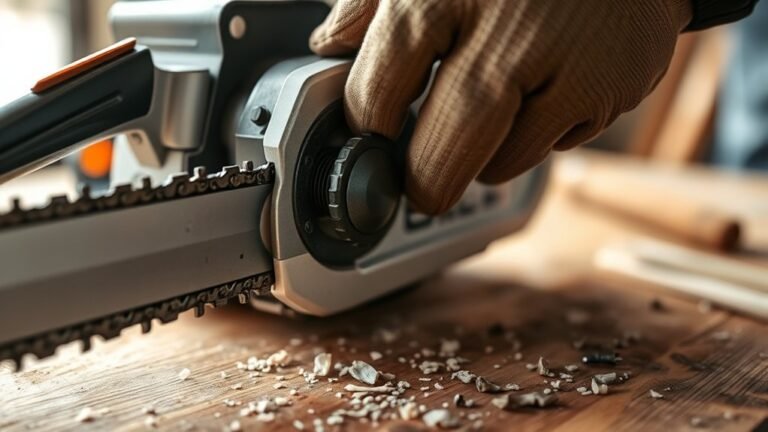
Once you’ve installed a longer bar, it’s essential to adjust the chain tension properly to avoid safety risks and guarantee smooth cutting. You’ll use the tensioning screw on the side to get the chain snug without binding, and always wear gloves while doing this.
Keep an eye out for common issues like a sagging chain or one that’s too tight. Test by spinning the chain manually before you start cutting. It’s a simple step that can save you a lot of trouble.
Importance Of Proper Tension
Since a longer bar puts more strain on your chainsaw’s chain, keeping the tension just right is crucial to prevent it from slipping off during use. Proper chain tension ensures the chain fits snugly against the guide bar but can still move freely.
Getting the tension wrong—too tight or too loose—can lead to wear, poor cutting, and derailment risks. You’ll need to perform chain adjustment carefully and recheck tension regularly since longer bars cause more stretch and fluctuations.
Remember these points:
- Tighten the chain so it’s snug but not stiff around the guide bar.
- Check chain tension multiple times after installation to maintain peak performance.
- Reassess tension periodically during use to avoid unexpected chain issues.
Step-By-Step Adjustment
Although adjusting the chain tension might seem straightforward, it’s important to do it carefully after fitting a longer bar to guarantee safe and efficient cutting. Start by loosening the tensioner, then adjust the chain tension so the chain sits snugly on the bar without binding.
Make sure the chain’s drive links are properly seated in the bar’s groove before tightening the tensioner fully. Check the chain tension by lifting the chain slightly; it should have about 1/4 inch of slack when cold.
Re-tighten the tensioner gradually, ensuring even tension along the entire chain length. After the first few cuts, recheck the chain tension as it can loosen slightly.
Proper bar adjustment and tensioner use assure your chainsaw runs smoothly and safely.
Common Tension Issues
After adjusting your chain tension to fit a longer bar, you might still encounter some common issues that affect your chainsaw’s performance.
When increasing the bar size, improper tension adjustment can cause problems that reduce safety and efficiency. Here are three common issues to watch for:
- Chain Too Loose – A larger bar often stretches the chain, so you’ll need to tighten it carefully to avoid derailment during cutting.
- Chain Too Tight – Over-tightening causes excessive wear and can damage both the chain and bar.
- Inconsistent Tension – The tension can change during use, so regularly check and adjust to maintain proper snugness without binding.
Common Mistakes When Upgrading Chainsaw Bars
When upgrading to a bigger chainsaw bar, you’ll want to avoid common mistakes that can compromise your saw’s performance and safety. One frequent error is choosing a bar longer than your chainsaw’s maximum recommended length. This can strain the motor and risk premature failure.
Another common mistake involves ignoring compatibility. The new bar must match your chain and sprocket to ensure safe operation. Overlooking your engine’s power capacity can also lead to poor cutting efficiency and increased safety risks if the bar is too large to handle.
Additionally, neglecting to adjust or upgrade the chain and tension during a chainsaw bar upgrade can cause the chain to derail or cut poorly. And finally, disregarding manufacturer guidelines or attempting a bar upgrade without proper knowledge may void warranties and damage your saw.
Always prioritize safety considerations and verify compatibility to keep your chainsaw running smoothly and safely. It’s better to take a little extra time now than deal with problems later!
Maintaining Your New Longer Chainsaw Bar for Best Performance
Upgrading to a longer chainsaw bar means you’ll need to put extra effort into maintaining it to keep your saw running smoothly. Proper bar maintenance ensures longevity and optimal performance, especially with the increased demands of a bigger bar.
Focus on these essential tasks:
- Adjust chain tension regularly – A longer bar requires precise chain tension to prevent slippage and ensure smooth cutting. Check it often and adjust as needed.
- Prioritize lubrication – Thoroughly lubricate both the chain and bar before each use. This reduces wear and prevents overheating, which can be more prevalent with a longer guide bar.
- Inspect and clean your bar – Look for uneven wear or damage, and periodically clean the bar groove and oil holes. This ensures proper lubrication flow and keeps everything running efficiently.
When to Ask a Pro for Help With Bar Upgrades
If you’re not sure whether a bigger bar is compatible with your chainsaw or lack the technical know-how, it’s wise to consult a professional before making any changes. Professional assistance is essential when evaluating chainsaw compatibility, especially since your saw’s engine power and design must support a larger bar without risking damage or safety issues.
Safety considerations are paramount. If your manufacturer specifies a maximum bar length, a pro can confirm whether exceeding it might void warranties or compromise safe operation.
When upgrades require modifications or chain tension adjustments, experts ensure proper installation for ideal performance. Complex changes involving custom parts or significant adjustments are best handled by trained technicians to avoid costly mistakes.
Frequently Asked Questions
Can I Just Put a Bigger Bar on My Chainsaw?
You can’t just slap a bigger bar on your chainsaw without checking compatibility first. Your saw’s engine and components have limits, so using an oversized bar might strain it or cause damage.
You’ll need to confirm your model supports a longer bar and possibly upgrade the chain and sprocket too. Always check the manual or ask a pro before making changes to keep your saw running safely and efficiently.
Can You Put a 24 Inch Bar on a 20 Inch Chainsaw?
You can put a 24-inch bar on a chainsaw designed for 20 inches, but only if your saw’s engine is powerful enough and the mounting system fits the bigger bar.
If your chainsaw isn’t built for that size, you might strain the engine or cause safety issues. Always check your manufacturer’s guidelines first.
Be ready to adjust the chain tension and use a compatible chain to make sure everything runs smoothly. It’s all about making sure your saw can handle the upgrade safely.
Can You Put a 16 Inch Bar on a 20 Inch Chainsaw?
Just like swapping a big sword for a nimble dagger, you can put a 16-inch bar on your 20-inch chainsaw. It’s actually safer and easier to handle, reducing strain on your motor.
Just make sure the bar fits your chainsaw’s model and chain specs. Doing this can improve maneuverability, cut down vibration, and help your chainsaw last longer.
Always double-check compatibility before making the switch.
Can I Put a 20 Inch Bar on an 18 Inch Chainsaw?
Yes, you can put a 20-inch bar on an 18-inch chainsaw if the bar is compatible and your chainsaw’s engine can handle the extra length. You’ll need to make sure the chain gauge and drive links match your saw’s specifications, and adjust the tension properly.
Keep in mind, a longer bar can strain your motor and affect safety. So, always check your manual or manufacturer’s guidelines before upgrading.
Conclusion
Upgrading to a bigger chainsaw bar can boost your cutting power, but make sure your saw’s engine can handle it.
For example, imagine you’re upgrading from a 16-inch to a 20-inch bar on a mid-powered saw—this lets you tackle larger logs but requires careful chain tension adjustments.
Follow the steps, avoid common mistakes, and maintain your new bar well.
If you’re unsure, don’t hesitate to get a pro’s help to keep your saw safe and effective.