
What Is a Tree Stand and How Does It Work?
A tree stand is a platform or seat you attach to a tree to get an elevated, concealed spot for hunting. It boosts your view and shot accuracy by putting you above ground level while helping you blend into the surroundings.
You secure it with straps or chains and use safety gear like a harness when climbing.
Different types fit various needs and terrains.
Keep exploring to discover how to pick, set up, and use one effectively for your next hunt.
Key Takeaways
- A tree stand is an elevated platform or seat attached to a tree to improve hunting visibility and accuracy. It’s basically a way to get up off the ground so you can see better.
- The stand is secured to the tree using straps, chains, or climbing mechanisms. This makes sure it stays put and keeps you safe while you’re up there.
- There are different types of tree stands like ladder, climbing, hang-on, and tree saddles. Each one is a bit different depending on how easy they are to move or set up.
- Hunters often use safety harnesses and climbing sticks to get up and settle in safely. It’s important to be careful and secure when you’re climbing.
- Being up high also helps with staying hidden from game. The height and camouflage make it easier to stay stealthy and get a better shot.
What Is a Tree Stand and Why Use One

What exactly is a tree stand, and why should you consider using one? A tree stand is a platform or seat you attach to a tree to give yourself an elevated position while hunting. By securely fastening the stand using straps, chains, or climbing mechanisms, you can safely sit or stand above ground level.
This elevated position lets you improve your field of view and shot accuracy when hunting from a tree. Plus, you’ll benefit from better concealment, since being above a deer’s eye level reduces the chance they spot you.
One popular option is the climbing stand, which lets you easily ascend the tree and adjust your height as needed. Using a tree stand strategically places you in a better vantage point and helps you overcome natural obstacles on the ground. It really gives you a significant advantage during your hunt.
Types of Tree Stands and Their Differences

Although all tree stands serve the same basic purpose, they come in several distinct types, each with unique features suited for different hunting situations.
Ladder stands are stationary and come with a built-in ladder, offering stability and easy access. They’re ideal if you want a reliable spot for one or two hunters.
Climbing stands include a platform and seat, allowing you to ascend trees of various sizes. This gives you flexibility in positioning.
Hang-on stands are portable and attach to trees with chains or cables. But they don’t have ladders, so you’ll need another way to reach them.
Tree saddles provide high mobility by letting you sit or stand while secured directly to the tree with a harness. They’re perfect if you value stealth and movement.
Each type offers different levels of mobility and setup, so choosing the right stand really depends on your hunting style and the terrain you’ll be in.
How to Use a Climbing Tree Stand

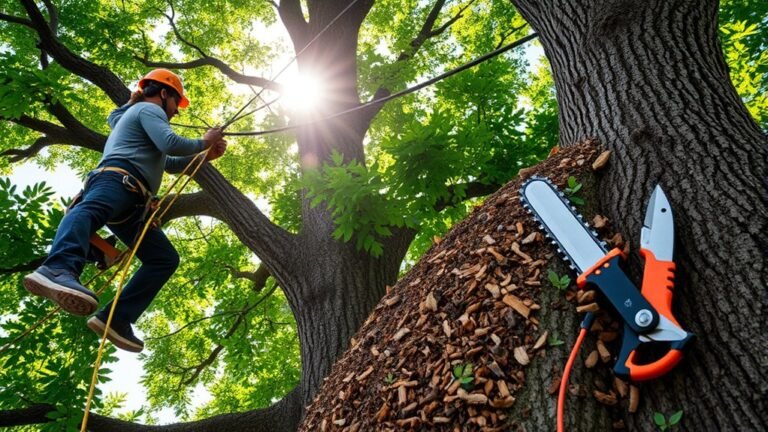
Climbing tree stands offer a unique blend of mobility and height adjustment that ladder and hang-on stands can’t match. To use a climbing tree stand, start by securing your safety harness to the tree at ground level.
Next, attach the stand to the tree using straps or cables. Make sure the metal contact points grip the bark firmly so it won’t slip.
As you climb the tree, alternate between the platform and climbing aids. Keep your safety line attached at all times to prevent falls—safety first!
Slide your full-body safety harness up as you ascend, especially once you pass the 20-foot mark. This helps keep you secure the whole way up.
Once you reach your desired hunting height, adjust the stand’s position and angle. Make sure it’s level or slightly pitched up for comfort and stability.
Finally, lash the platform and aid together during the ascent for added security. Follow these steps, and you’ll be able to use your climbing tree stand safely and effectively for a successful hunt.
Picking the Perfect Tree for Your Tree Stand
Since the right tree can make or break your hunting experience, you’ll want to choose one that’s straight, sturdy, and fits your stand’s straps or brackets—usually between 8 to 20 inches in diameter.
When selecting your tree for a climbing stand, look for a tree trunk with rough or textured bark, like oak or pine, to help the stand grip securely and prevent slipping. Avoid trees with loose or decayed wood, as they can’t safely support your weight.
Also, make sure the tree has no large branches within your hunting height to keep your shooting lane clear and maintain safety. Natural features such as limbs or branches near your position are a plus since they provide additional cover and help conceal you from game.
Securing Your Tree Stand to the Tree Safely
To secure your tree stand safely, make sure you use straps or chains rated for your weight and tighten them properly to avoid slipping. Always attach every strap or cable firmly and check that the stand is stable before climbing.
Don’t forget to connect your safety harness to the tree first. This will protect you during setup and while hunting. It’s better to be safe than sorry!
Proper Strap Attachment
When securing your tree stand, you’ll want to make sure all straps are properly attached and tightened around the tree trunk. Use a strong tree strap or cinch strap to achieve a secure attachment. Make sure it’s snug enough to prevent slipping without harming the tree.
Position the straps at multiple points around the trunk to evenly distribute weight and enhance stability. Always double-check that the straps are free from twists or frays. If you notice any damage, replace the straps before use.
Tighten each strap securely, and don’t forget to periodically inspect them during your hunt. This way, you can be sure they remain fastened. Proper strap attachment is essential for safety and stability, giving you confidence while you’re up in the stand.
Harness Connection Techniques
Although securing your tree stand properly is important, connecting your safety harness to the tree is even more critical for preventing falls. Always attach your full-body harness to the tree at ground level before climbing to guarantee continuous protection.
Use a fall arrest system or lanyard that connects securely to a tree strap or anchor point. Employ a lifeline or tether that slides smoothly as you ascend, allowing freedom of movement while maintaining safety.
Before climbing, double-check all connection points, straps, and knots to confirm a secure attachment and good condition. Regularly inspect your safety harness and connection techniques to avoid equipment failure.
How to Stay Safe With a Tree Stand Harness and Lifeline
Since safety depends on staying securely connected to the tree from the moment you start climbing, always attach a full-body safety harness before you ascend and keep it secured throughout your hunt.
Your harness should be securely attached to a lifeline—a rope with a Prussic knot works well—to maintain constant connection from the ground to your tree stand.
As you climb, clip your harness tether to the lifeline and slide it smoothly upward or downward, ensuring continuous protection against falls.
Regularly inspect both your harness and lifeline for any signs of wear, damage, or fraying before each use to guarantee reliable safety.
When climbing, move slowly and deliberately. Trust your harness and lifeline, but avoid sudden movements that could compromise your balance.
Essential Climbing and Setup Tips for Tree Stand Safety
Before you start climbing, always wear a full-body harness and secure it to the tree at ground level. This is super important for your safety.
Make sure your stand is properly installed with metal contact points and tightly lashed to prevent slipping. Taking these steps helps keep everything steady.
Take your time climbing, checking each step as you go. Also, confirm the stand is level for a safe setup. It’s better to be slow and safe than rushed and risky!
Harness Use Essentials
When you’re climbing into your tree stand, wearing a full-body safety harness from the moment you leave the ground is essential to prevent falls. Always use a safety harness that fits snugly and is adjusted properly to avoid slack. Slack can be dangerous while you’re moving around.
Attach your harness securely to the tree with a lifeline that’s anchored above your stand. This ensures continuous protection throughout your climb and hunt. Using a Prussic knot or a similar sliding knot on the lifeline lets you easily move the harness up or down as you ascend or descend.
Before each use, take a good look at your full-body harness and all safety gear for any signs of wear or damage. Keeping everything in good shape helps everything work reliably and keeps you safe during your time in the stand.
Stand Installation Techniques
Although setting up a tree stand might seem straightforward, following proper installation techniques is essential for your safety and comfort. Start your stand installation by using secure straps or chains to tightly fasten the stand to the tree. Make sure it won’t shift once you’re up.
Attach your full-body safety harness at ground level and slide it upward as you climb. This keeps you protected in case of a slip. Use climbing sticks carefully, maintaining three points of contact to avoid instability.
Once at your hunting height, adjust the stand platform to be level or slightly pitched up for comfort and safety. Finally, remove any obstructive branches quietly to prevent noise and ensure a clear shot. These steps keep your setup safe and efficient.
How to Position Your Tree Stand for Better Concealment
Because deer rely heavily on their keen senses to detect threats, positioning your tree stand strategically is essential for better concealment. Start by focusing on stand placement—face your stand away from deer approach routes to reduce the chance of being spotted.
Align your stand parallel to trails and natural cover. This helps conceal any movement and breaks up your silhouette.
Elevation plays a key role; placing your stand 20-30 feet high makes it harder for deer to detect you. Use natural cover like overhanging limbs, shrubs, or tall grass nearby to blend your outline with the surroundings.
Position your stand near branches or foliage that can effectively mask your shape from multiple angles. By carefully considering approach routes, elevation, and natural cover, you’ll considerably improve your concealment, making it less likely a deer will notice your presence.
This thoughtful stand placement increases your chances of a successful hunt while minimizing disturbance.
Adjusting Shot Angles When Hunting From a Tree Stand
Once you’ve positioned your tree stand for ideal concealment, the next step is adjusting your shot angles to account for elevation. Shooting from 20-30 feet up changes your aim point because of gravity and bullet trajectory.
For steep downward shots, aim lower than the deer’s vital zone using angle compensation to guarantee accuracy. Conversely, for upward shots, increase your aim point to counteract the bullet’s arc.
Here’s a quick guide to adjust your shooting angles based on elevation:
| Elevation Angle | Typical Aim Adjustment | Reason | Effect on Trajectory | Notes |
|---|---|---|---|---|
| Steep Downward | Aim lower | Gravity pulls bullet down | Flatter, quicker drop | Angle compensation needed |
| Moderate Down | Slightly lower | Mild gravity effect | Moderate bullet drop | Use shooting app |
| Flat | Aim directly | No elevation effect | Straight trajectory | Standard aiming |
| Moderate Up | Aim slightly higher | Bullet arcs upward | Longer time to target | Adjust for trajectory |
| Steep Up | Aim considerably higher | Strong bullet arc | Pronounced arc | Essential angle compensation |
Practice these adjustments to make ethical, humane kills from your tree stand. It really helps to get comfortable with these changes before you head out.
Essential Accessories and Gear for Tree Stand Hunting
What gear do you really need to make your tree stand hunt both safe and successful? First and foremost, a full-body safety harness is essential—it keeps you securely attached to the tree, preventing dangerous falls while climbing or waiting in your stand.
Use climbing sticks to safely ascend from ground level to your stand, ensuring stable footing every step of the way. Once you’re settled, clear shooting lanes by trimming branches carefully to improve your shot without spooking game.
Don’t forget accessories like pull-up ropes for hauling gear up and pruning shears to maintain your shooting lanes throughout the season. Items such as camouflage tape, platform cushions, and bow holders improve comfort and concealment, making long waits more manageable.
Prioritizing safety harness use combined with proper gear means you’ll enjoy a safer, more effective hunt every time you take to the trees. It’s all about being prepared and staying comfortable while you wait for that perfect shot.
Frequently Asked Questions
What Can I Use Instead of a Tree Stand?
If you’re looking for alternatives to a tree stand, you can use tree saddles, ladder stands, hang-on stands, or ground blinds. Tree saddles let you climb and hunt with less gear, giving you more flexibility.
Ladder stands offer a stable, stationary platform with easy access. They’re great if you want something reliable and steady.
Hang-on stands are lightweight and portable, perfect for moving around easily.
Ground blinds keep you concealed on the ground, so you don’t have to climb at all. They’re a good option if climbing isn’t your thing.
Is a Blind or Tree Stand Better?
When it comes to blinds vs. tree stands, it really depends on your hunting style and conditions. If you want the upper hand with better visibility and shooting angles, a tree stand’s your best bet.
But if you prefer staying low and hidden, especially in bad weather, a blind will suit you better. Sometimes, you’ve got to play your cards right and choose what fits your terrain and comfort.
Where Is the Best Place to Put a Tree Stand?
The best place to put your tree stand is on a straight-trunk tree with no branches at your hunting height. It’s great if it’s near natural cover to help break up your silhouette.
You’ll want to position it facing away from deer entry points. Being close to food sources or travel corridors is a smart move too.
Setting it 20-30 feet high helps with concealment. Plus, it keeps you out of the deer’s direct line of sight, which can really boost your chances for a successful hunt.
How Long Can You Leave a Tree Stand Up?
You might think you could leave a tree stand up forever, but that’s not quite the case. How long you leave it depends on the type—hanging or climbing stands are usually best removed after one to two weeks to avoid damage or theft.
Ladder and permanent stands can stay up for the whole season or even year, if well maintained. Always check local laws, though, because rules about timing vary by area.
Conclusion
Using a tree stand can boost your hunting success by giving you better visibility and concealment. Did you know that hunters who use tree stands report a 30% higher chance of spotting game?
By choosing the right stand, securing it safely, and positioning yourself well, you’re not just improving your chances—you’re also staying safer. So, take these tips to heart and enjoy a more rewarding, safer hunting experience from above the ground.